Is Lanzarote Wine Any Good?
The straight answer on Lanzarote wine quality: what malvasía volcánica does well, where it falls short, the awards and the DO behind it, and why a bottle loved on the island can disappoint at home.
 By Sergio Betancort, Lanzarote Wine Tour Specialist and Volcanic Vineyard Guide
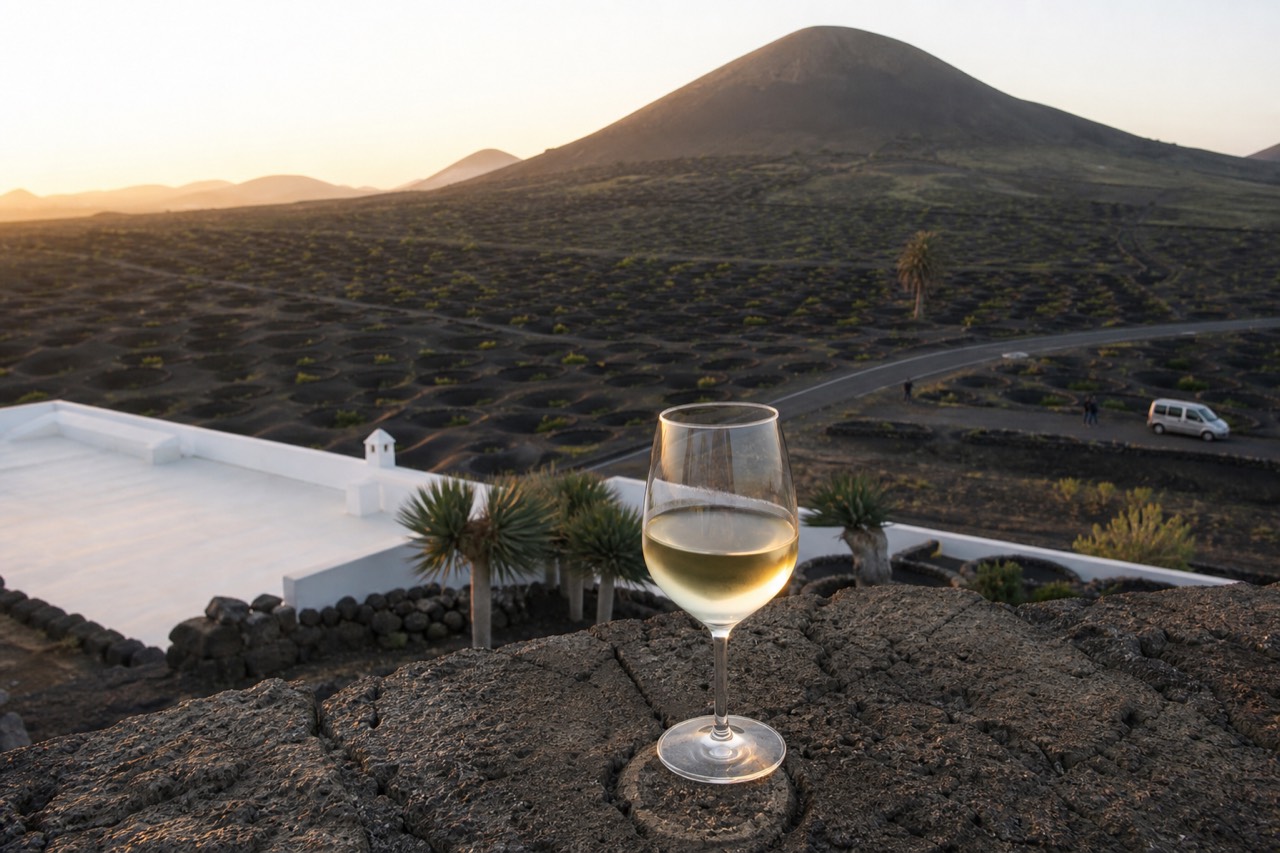
Is Lanzarote Wine Any Good?
Yes, Lanzarote wine is genuinely good, and the 2025 vintage was officially qualified "muy buena", very good, by the island's own regulator after a blind tasting of 23 wines. The strongest outside evidence is a Silver medal, 90 to 94 points, for Vega de Yuco's Princesa Gara 2022 at the Decanter World Wine Awards 2026. The honest qualifier: it is a niche, saline, high-acid style that not every palate will love.
That is the short version. The longer version matters, because "good" is doing a lot of work in that sentence, and the answer changes depending on whether you are standing on a terrace in La Geria or opening the same bottle in a rainy kitchen at home.
Start with the structural facts. DO Lanzarote was recognised as an appellation in 1993, covers the whole island, and is overwhelmingly a white-wine designation: roughly 84 per cent of what it sells is white, and about 98 per cent of it never leaves Spain. Scarcity is built in. The appellation permits 7,000 kg of grapes per hectare; La Geria actually yields around 1,000. The 2025 harvest brought in 843,000 kg of grapes and produced 1,502,656 bottles for the entire island, against roughly 3.45 million tourists a year. Do the arithmetic and you see why almost none of it gets exported, and why most people reading this have never tasted it.
Quality claims are cheap on the internet, so this page leans on hardware: medals, scores and official vintage qualifications, all dated 2025 or 2026. If you want to test the claims against your own palate rather than take a medal's word for it, these are the three tastings that put the island's best-regarded styles in front of you most efficiently.
Is Wine From Lanzarote Good By International Standards?
By international standards, yes, with evidence: a Silver at the Decanter World Wine Awards 2026, a Grand Gold at Bacchus 2026 and two golds at Mundus Vini 2026, all won by Lanzarote bodegas within the past year. The honest caveat is that at the Canaries' own official 2026 competition, the top wines came from Tenerife, not Lanzarote.
The Decanter result is the one to fix on, because it is the world's largest wine competition and the score is explicit. Vega de Yuco's Princesa Gara 2022, a single-varietal Malvasía Volcánica aged on lees, took Silver, which on Decanter's scale means 90 to 94 points out of 100, with the judges' note praising typicity, acidity and mineral character. Its traditional-method sparkling, Princesa Fayna Brut Nature 2019, took Bronze at the same event. A Grand Gold at Bacchus 2026 went to Timanfaya Malvasía Dulce Natural 2018, the competition's top award, and Princesa Fayna sparkling 2019 took a Gold there too. El Grifo, the island's 1775-founded benchmark winery, announced two gold medals at Mundus Vini 2026 on its own site.
Now the caveat, because a page that only lists medals is a brochure. At the Concurso Oficial de Vinos de Canarias 2026, the archipelago's own official competition, the Best Wine of Canarias award went ex aequo to two Tenerife wines. Two Tenerife wines shared Best Wine of the Canarias in 2026. Within the Canaries, Lanzarote is a distinctive and awarded region, not the dominant one. What it has that Tenerife does not is a single signature grape grown in a landscape found nowhere else, and that is exactly what the international juries rewarded.
| Competition | Year | Wine | Bodega | Result |
|---|---|---|---|---|
| Decanter World Wine Awards | 2026 | Princesa Gara 2022 | Vega de Yuco | Silver, 90-94 pts |
| Decanter World Wine Awards | 2026 | Princesa Fayna Brut Nature 2019 | Vega de Yuco | Bronze |
| Bacchus | 2026 | Malvasía Dulce Natural 2018 | Bodegas Timanfaya | Grand Gold |
| Bacchus | 2026 | Princesa Fayna sparkling 2019 | Vega de Yuco | Gold |
| Mundus Vini | 2026 | Two wines, unnamed in the announcement | El Grifo | Two Golds |
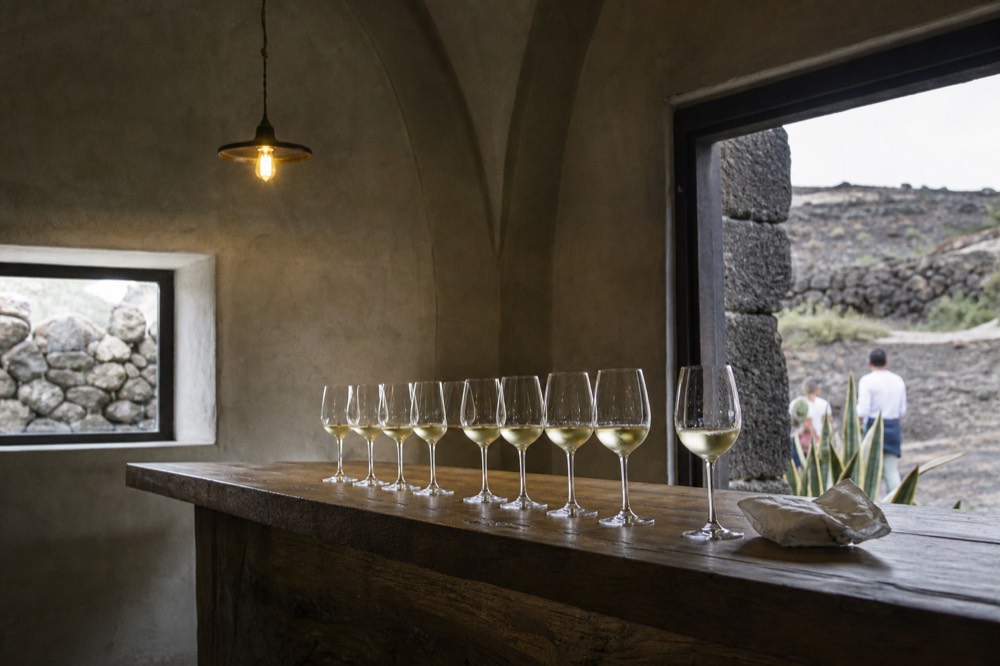
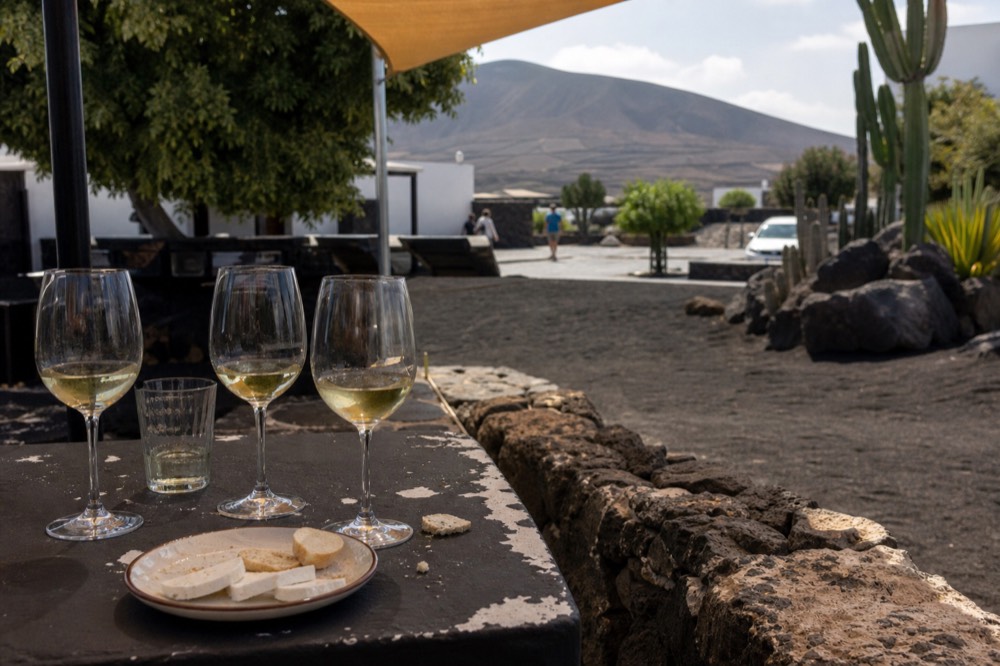
One way to check the judges' work is to taste the medal-winning style in the place it is grown, with someone who can explain why the ash does what it does to the glass. The Natural Wines, Canarian Pairing tasting in La Geria is built exactly for that.
What Does Malvasía Volcánica Do Well?
Malvasía volcánica's strengths are salinity, acidity and aromatics: grown in volcanic ash with under 150 mm of rain a year and a diurnal swing up to 17 °C, it makes whites that taste of citrus, stone fruit and sea salt, with a mineral edge and enough freshness to age. The sweet versions, from overripe grapes, are its most decorated style.
The grape is the island's signature and comes first in the winery almost every harvest, as is tradition. It accounted for about 70 per cent of the 2022 crop, per Consejo Regulador figures reported locally, though that is a harvest share, not a planted share, and the two must never be confused. It dominates precisely where the ash layer is deepest and the pits are largest, the oldest cultivated zones of La Geria.
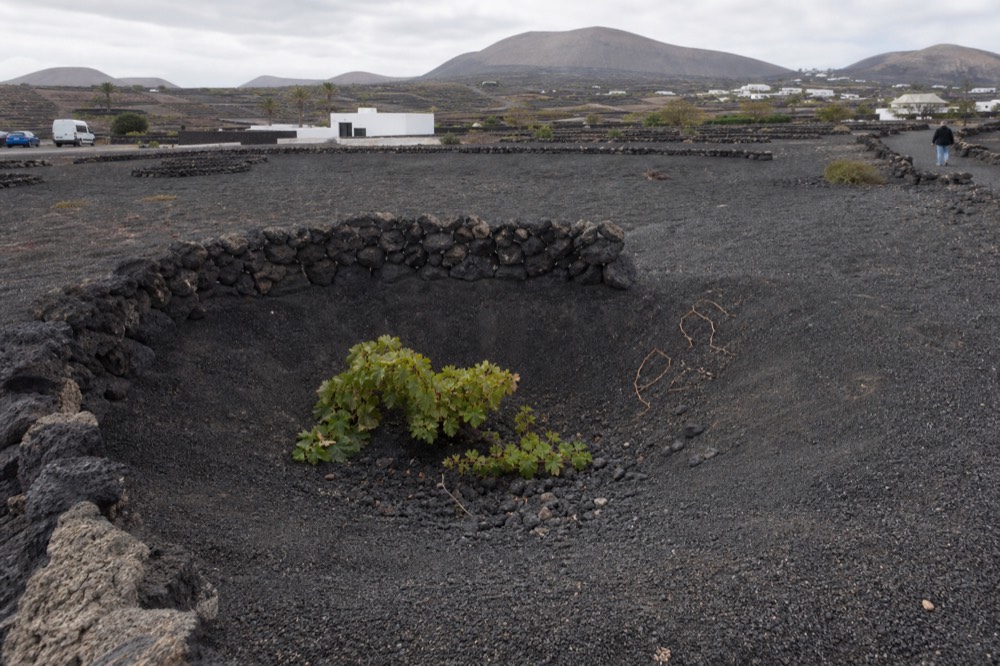
What the deep-ash growing conditions deliver is a flavour profile that wine writers now group with other volcanic islands, Etna and Santorini among them. Low yields concentrate it: one vine per pit, roughly 36 pits per hectare in the deepest-ash zone, each pit about three metres across and two to two and a half metres deep, dug down to the soil buried by the eruptions of 1730 to 1736. The result in the glass is a white that tastes distinctly of its origin, which is the thing international juries keep rewarding. If you want the full sensory breakdown, the companion piece on what volcanic wine tastes like goes glass by glass.
The sweet end of the spectrum deserves separate mention, because it is where Lanzarote wins its biggest prizes. Timanfaya's Malvasía Dulce Natural 2018, a naturally sweet wine from dried grapes, took the Grand Gold at Bacchus 2026, the competition's highest award, against a field of wines from every major Spanish region. That is not a curiosity medal. It is the style the island has refined longest.
For tasting the dry side at source, the small-group pairing experience in La Geria is the roster's most focused option, capped at 10 people or fewer with an artisanal cheese and seasonal Canarian plate alongside the wines.
Are Lanzarote Wines Good Across The Board, Or Only The Flagships?
No, not across the board. The medals cluster around a handful of bodegas and around malvasía volcánica specifically, while the DO also permits a long list of authorised varieties, including international ones like Cabernet Sauvignon and Syrah, whose island versions are competent rather than thrilling. The honest answer is that the medals cluster on a handful of bodegas, above all on Malvasia Volcanica, while the middle is variable.
The appellation's own variety list tells the story. The preferred group is led by Malvasía Volcánica, with Diego, Listán Blanco and Moscatel de Alejandría alongside it. The authorised group includes Tempranillo, Pinot Noir, Merlot and Syrah. Some of the island's reds and rosés are genuinely good, El Grifo's Rosado de Lágrima 2025, a Listán Negro, drew a warm national press review in 2026, but the decorated wines, year after year, are the whites and the sweet Malvasías. Red is about nine per cent of what the DO sells.
There is also a vintage-volatility problem the marketing never mentions. The 2025 crop was one of the smallest harvests in years at 843,000 kg, down from 3.3 million kg in 2023, because of irregular budbreak and adverse weather. The 2026 campaign is forecast to close above three million kilos, roughly triple 2025, but a region that swings that hard between years will have weaker vintages in the pipeline, and a bottle from a thin year will not show the grape at its best. Check the vintage on the label before you judge the region.
Why A Bottle That Tastes Great On The Terrace Can Disappoint At Home
A Lanzarote white that sings on a hot terrace can fall flat at home for three reasons: the style is built for heat and food, high acid and low alcohol need warmth and salt to shine; the bottles travel badly through amateur luggage conditions; and the scarcity means most exports are the entry-level lines, not the medal winners. Context, not chemistry, does the disappointing.
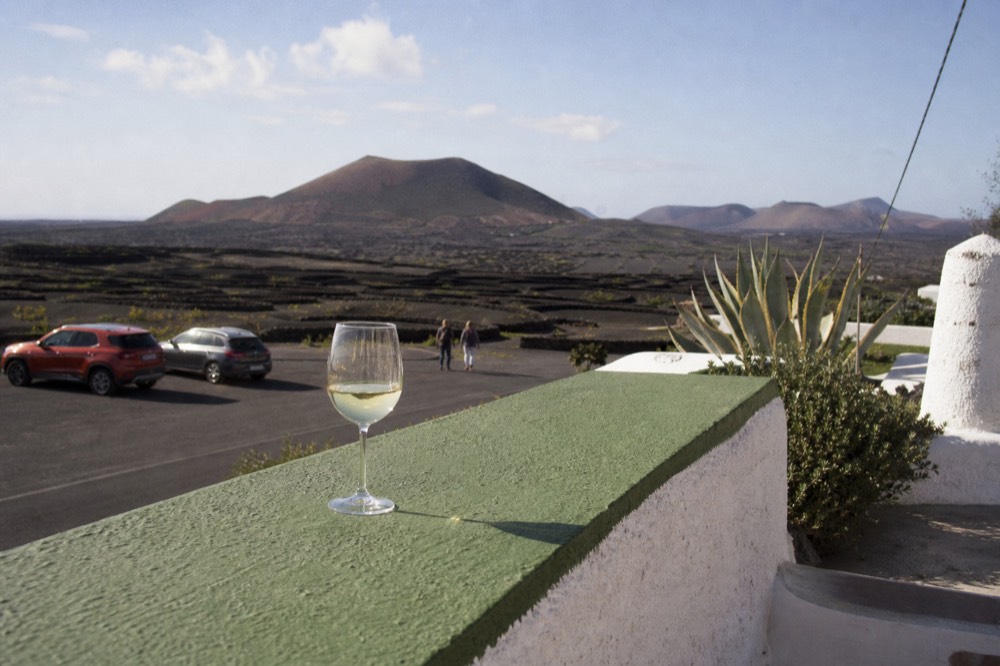
The first reason is the biggest. Malvasía Volcánica's calling card is acidity and salinity, and both read as "thin" or "sharp" when a cold bottle is opened in a northern kitchen with nothing on the plate. The same wine poured slightly cooler than fridge temperature, with grilled fish, goat cheese or anything salty, suddenly makes sense. The island's own tastings almost always pair the wines with Lanzarote goat cheese for exactly this reason, and the pairing is not a gimmick, it is the correct serving condition.
The second reason is practical. About 98 per cent of DO Lanzarote's wine is sold inside Spain, so what leaves the island is a thin slice, and the bottles that reach mainland shops and UK merchants are frequently the high-volume entry lines rather than the lees-aged or sweet trophy wines. The Silver-medal Princesa Gara and the Grand-Gold Timanfaya Dulce are not the bottles you will find in a random supermarket. If you want the good ones at home, the buying guide to Lanzarote wine brands worth seeking out names the specific bottles, and there is a separate answer on buying Lanzarote wine in the UK.
The third reason is the one nobody can fix: the terrace itself. Volcanic whites are aromatic and delicate, and the memory of drinking one with Timanfaya's cones in view is part of what you are tasting. Strip that away and you are left with a very good, unusual white wine that has to argue its case on its own. Some days it wins the argument. On others you will wish you had bought three bottles instead of one, because the second is always better than the first, which is a wine-trade cliché everywhere except it is especially true here.
Is A Tasting Worth Doing Before You Buy?
Yes, a tasting is the cheapest way to find out whether Lanzarote wine is good for you specifically, because the style is unusual enough that a stranger's medal is a weak predictor of your own reaction. A two-hour tasting at El Grifo costs from $58, a three-winery driven tour from $105, and either answers the question better than any review.
The economics are straightforward. Bottles at the bodega shops cost a fraction of what the same wines cost abroad, if they are available abroad at all, so a tasting plus a few bottles you already know you like beats a case bought blind. The El Grifo tasting tour, rated 4.9 from 365 reviews, includes cheese and is limited to 10 participants, which keeps the tasting conversational rather than conveyor-belt. The Three Wineries, Six Wines tour, rated 5 from 112 reviews, is the broader test: three bodegas, six wines, Lanzarote goat cheese, capped at 8 travellers, with transport included, which matters because Spain's breath-alcohol limit of 0.25 mg/l is lower than the UK's 0.35 and a tasting flight will not leave most people comfortably under it.
There is also an argument from scarcity. With roughly 1.5 million bottles produced in 2025 and nearly all of them drunk in Spain, the tasting room is, for most visitors, the only reliable place to meet the region's better wines. Waiting until you get home means waiting for a distribution chain that barely exists.
The three-winery format is the one that samples the widest range of styles in a single afternoon, which is why it is the pick for people whose real question is "which of these do I actually like?"
What The Island Itself Says About Its Own Quality
The island's own regulator is the most credible cheerleader here, because its praise is slow and procedural: the 2025 vintage was qualified "muy buena" only after a blind tasting of 23 wines, and the DO's growing system was added to the FAO's Globally Important Agricultural Heritage Systems list in 2025. Neither is a marketing claim, and both are checkable.
The vintage qualification process is worth understanding, because it is a real gate. The Consejo Regulador blind-tastes the year's wines by category, 11 dry whites, four rosados, four reds and four semi-sweet whites in the 2025 act, before stamping the vintage. A "muy buena" rating on one of the smallest harvests in years is a statement that the fruit quality held even when the volume collapsed, which tracks with what the international juries found in the 2026 medal round.
The FAO recognition is different in kind. Lanzarote's volcanic dry-farming system, the pits and ash and half-moon walls of La Geria and the jable sand fields, joined the Globally Important Agricultural Heritage Systems list in 2025, registered as "Agricultural Systems in Jable and Volcanic Sands in Lanzarote Island, Spain". That is a statement about the farming, not the wine, but the two are inseparable: the yields of around 1,000 kg per hectare that the ash enforces are the same low yields that concentrate the flavour in the glass. The island's own story, told honestly by Lanzarote Wine Tours across its guides, is that the wine is good because the farming is extraordinary, and the extraordinary part is visible from the road before you ever taste anything.
Whether that adds up to "good" for you is a question only your palate can settle, and the island makes settling it easy. These are the three tastings that answer it most directly.
The short answers below cover the questions people actually ask about Lanzarote wine quality, from the international medal record and ageing potential to why the bottles cost what they do and whether you can judge the style without flying out. Each answer is a few sentences long and sticks to verified figures, so you can settle the "is it good" question for your own palate quickly.
Common Questions About Lanzarote Wine Quality
Is Lanzarote Wine Any Good?
Yes. The 2025 vintage was officially qualified "muy buena" by the island's regulator, and in 2026 Lanzarote wines took a Silver (90-94 points) at the Decanter World Wine Awards, a Grand Gold at Bacchus and two golds at Mundus Vini. The qualifier is that the style, saline and high-acid, is distinctive rather than universally appealing.
Is Wine From Lanzarote Good?
Yes, with evidence beyond local pride: named wines from Vega de Yuco, Timanfaya and El Grifo won international medals in 2026. Within the Canaries, though, Tenerife took the top award at the region's own 2026 competition, so Lanzarote is awarded without being dominant at home.
Are Lanzarote Wines Good For Ageing?
The best ones, yes. Malvasía Volcánica aged on lees, like the Silver-medal Princesa Gara 2022, and the sweet Malvasía Dulce Natural styles both have the acidity and structure to develop. The entry-level dry whites are made to be drunk young and are better that way.
What Is The Best Wine From Lanzarote?
By 2026 hardware, the strongest candidates are Vega de Yuco Princesa Gara 2022 (Decanter Silver, 90-94 points) and Timanfaya Malvasía Dulce Natural 2018 (Bacchus Grand Gold). See the dedicated guide to the best wines and brands for the full list.
Why Is Lanzarote Wine So Expensive?
Because yields are around 1,000 kg per hectare against a legal ceiling of 7,000, the whole island produced only 1,502,656 bottles in 2025, and about 98 per cent of it is consumed in Spain. Scarcity, hand-dug vine pits and low volumes set the price floor, not branding.
Can I Judge Lanzarote Wine Without Visiting?
Partly. UK and Irish merchants stock a selection of the island's wines, but the export slice skews toward entry-level bottles rather than the medal winners. A tasting on the island remains the most reliable test of whether the style suits you.