What Wine Is Lanzarote Famous For?
Lanzarote is famous for Malvasía Volcánica, a white grape grown in hand-dug volcanic ash pits. Here is what the island's DO certifies, plus its reds, sweet wines and how they differ from Tenerife's and La Palma's.
 By Sergio Betancort, Lanzarote Wine Tour Specialist and Volcanic Vineyard Guide
What Wine Is Lanzarote Famous For?
Lanzarote is famous for Malvasía Volcánica, a white grape that makes up roughly 70% of a typical harvest and grows in hand-dug pits through black volcanic ash. Around it sit smaller plantings of Listán Blanco and the red Listán Negro, plus a long sweet-wine tradition built on Moscatel de Alejandría and Malvasía Dulce Natural, all certified under the DO Lanzarote, an appellation covering the whole island since 1993.
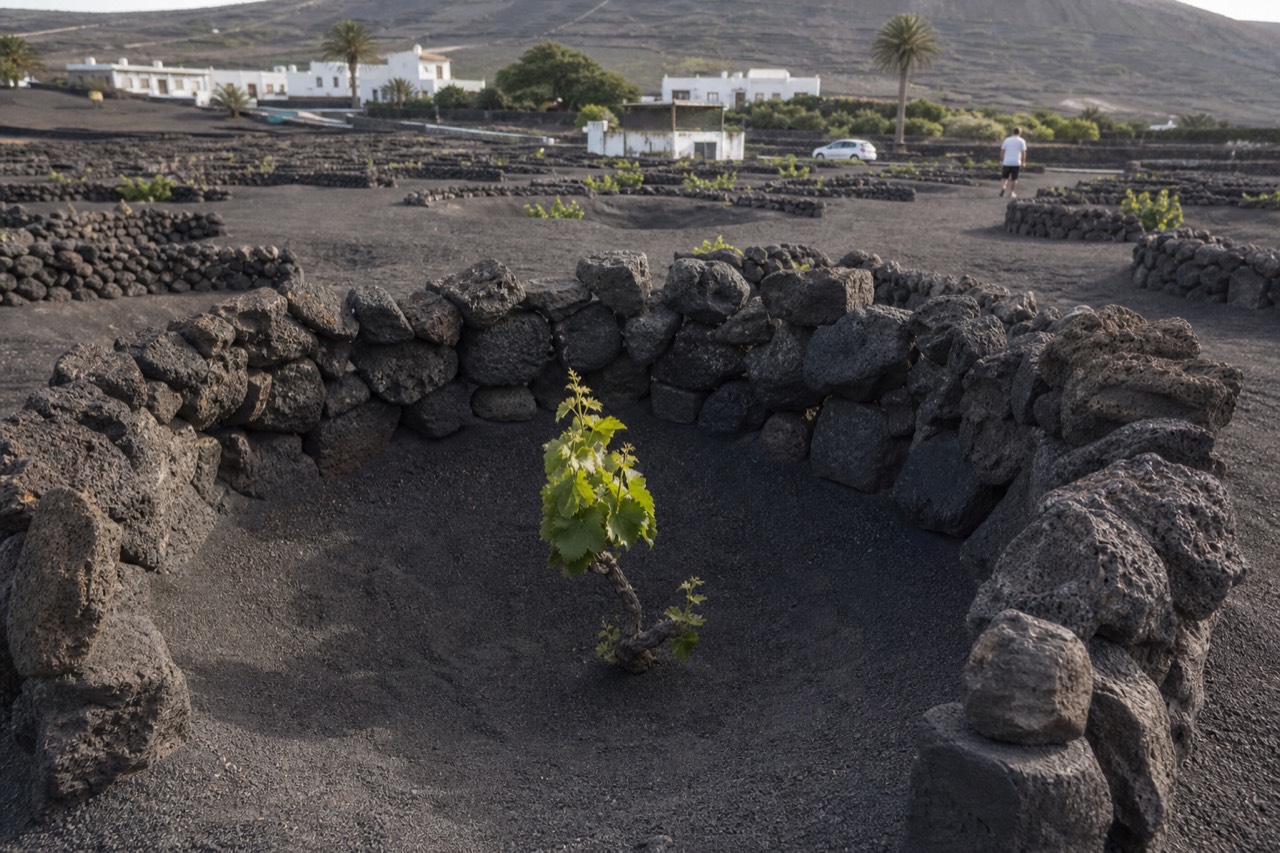
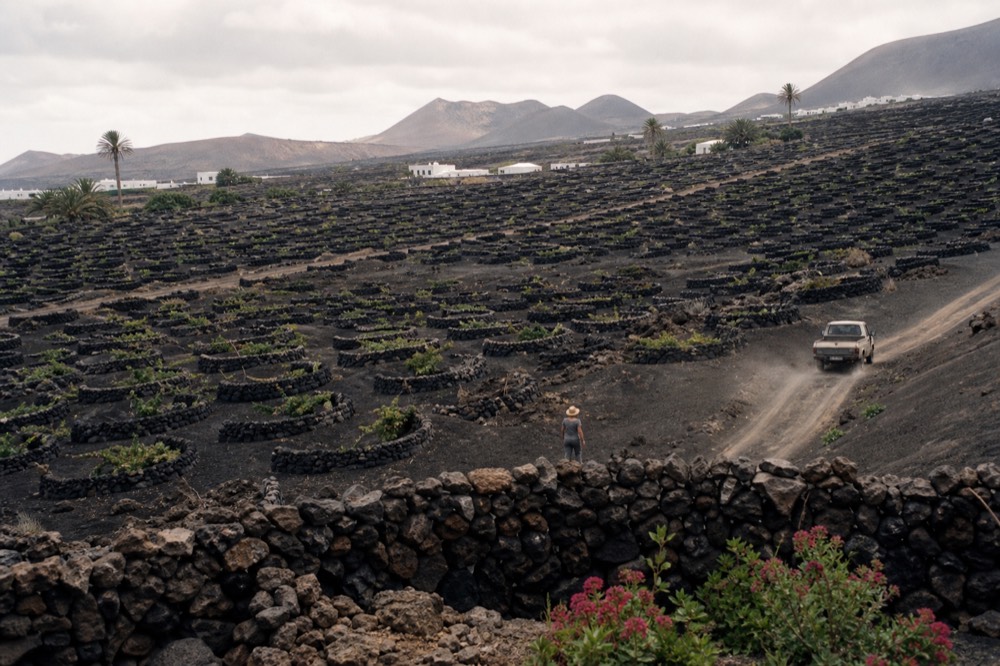
That single grape is the honest headline, and it is worth understanding why it dominates. The 1730 to 1736 eruptions buried the island's farmland under a blanket of lapilli, the gravel-fine volcanic ash locals call picón. Farmers responded by digging pits about three metres across and two to two and a half metres deep, down to the buried pre-eruption soil, and planting a vine at the bottom of each one. In the deepest-ash zone of La Geria there are only about 36 of those pits to a hectare, against thousands of vines in a conventional vineyard. Malvasía Volcánica, per the protected-landscape plan's own data, predominates in exactly those oldest growing zones where the ash layer is thickest and the pits are largest.
The grape is not some ancient import left to drift. Regional press covering the Consejo Regulador calls it "la joya enológica de la isla", the island's oenological jewel, and notes that it is traditionally the first variety into the winery each July. Its share of the 2022 harvest was about 70%, roughly 1.4 million kilograms of a crop near 1.95 million, with Listán Negro a distant second at about 199,000 kg, per Consejo Regulador figures reported locally.
If you want to taste the answer rather than read about it, three bodega experiences cover the island's signature styles at very different price points.
Malvasía Volcánica: The Grape The Island Is Built Around
Malvasía Volcánica is a white grape that dominates Lanzarote's harvest, its oldest vineyards and its award tables, and it is the variety every tasting on the island will put in front of you first. It is the grape the DO's own rules place in the preferred category, the one the landscape was effectively rebuilt to grow, and the one behind the island's strongest recent international result, a Silver medal at the Decanter World Wine Awards 2026.
The name matters more than it looks. Malvasía Volcánica is not the same grape as the Malvasía of Madeira or the Canarian Malvasía of Tenerife and La Palma; it is the island's own form, and the DO's product specification lists it among the preferred white varieties alongside Diego, Gual, Moscatel de Alejandría, Verdello and others. What the specification also records is where the grape does best: the plan for the protected landscape notes Malvasía predominates in the oldest cultivation zones, where the rofe layer is deepest and the hoyos are biggest.
The 2026 awards season gives the answer a hard edge. At the Decanter World Wine Awards, judged in London, Bodegas Vega de Yuco's Princesa Gara 2022, a single-varietal Malvasía Volcánica aged on lees, took a Silver medal, which on Decanter's scale means 90 to 94 points out of 100, with judges praising its typicity, acidity and mineral character. Its sister sparkling, Princesa Fayna Brut Nature 2019, took a Bronze. At CINVE 2026, five Lanzarote wineries took eleven medals between them, four of them Grand Gold, and Princesa Gara 2022 appears on that list too, per regional press coverage.
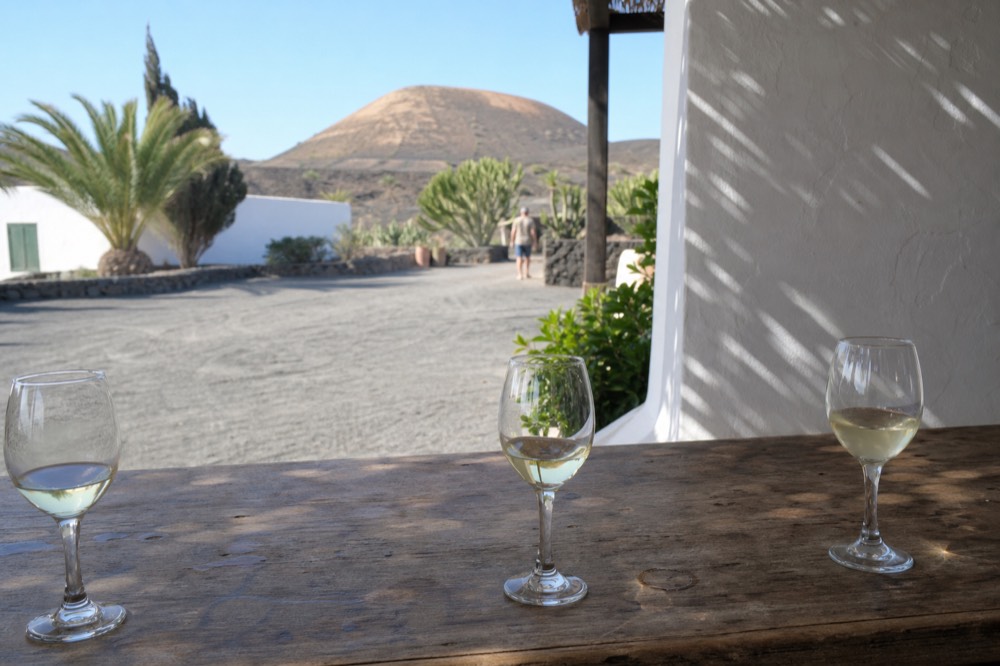
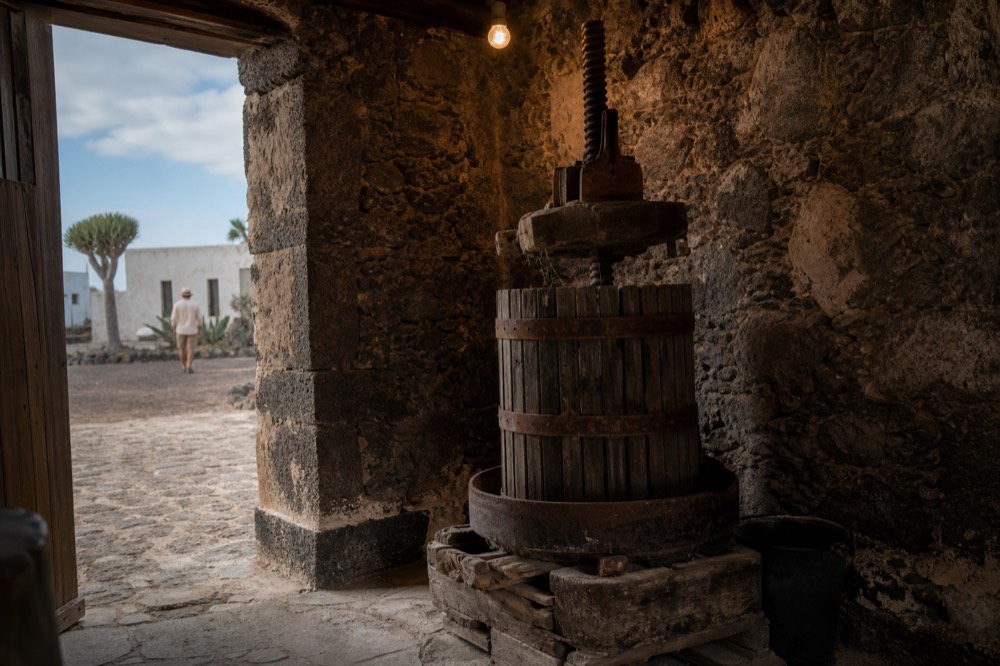
No page about this grape is complete without El Grifo, the San Bartolomé winery founded in 1775 according to the inscription on its own wine press, and the winery's own history page records that 19th-century Moscatel vines still stand on the estate. El Grifo closed its 250th anniversary year on 31 October 2025 with an official visit from Spain's agriculture minister, and it announced two gold medals at Mundus Vini 2026 on its own news page. Its bodega tasting is also the most direct way to taste Malvasía Volcánica where it is grown, and it is a short guide in itself: El Grifo's tasting tour runs two hours with cheese included, from $58, rated 4.9 across 365 reviews and capped at 10 participants.
One practical note before you book anything. El Grifo's own visit programme also sells direct: an audio-guided museum visit with a two-wine tasting at 15 euros, a five-wine tasting at 30, and a two-hour Wine Lovers tour with six wines at 50, so comparing the operator's live listing against the winery's own slots is worth two minutes of your time before you commit.
ListáN Negro And The Reds Lanzarote Actually Makes
Lanzarote is overwhelmingly a white-wine island, roughly 84% of what the DO sells is white, but it does make reds, and the one worth knowing is Listán Negro, a dark-skinned variety that handles the ash-pit vineyards and produces the island's rosados and light reds. Reds and rosés together are a small fraction of the appellation's output, which is exactly why a good Lanzarote red is an interesting thing to taste rather than an obvious one.
The commercialisation split from the Spanish agriculture ministry's DOP report makes the proportions plain: white carries roughly 84% of everything the DO sells, with rosé and red together a small remainder. That is a wine culture whose centre of gravity sits firmly with Malvasía Volcánica and Listán Blanco. But the reds are not a footnote. Listán Negro, listed in the DO's preferred red group alongside Negramoll, Malvasía Rosada and Tintilla, is the variety behind the island's most visible red and rosé bottles, and El Grifo's Rosado de Lágrima 2025, a Listán Negro, drew a review in Elle Spain calling it elegant, mineral and delicate.
The clearest recent proof that Lanzarote reds travel came at the International Volcanic Wine Awards 2025, where Bodegas Vega de Yuco won Gold for Esencia Yaiza, a Listán Negro, alongside Silver for Princesa Gara, per regional press. A volcanic-wine competition is the natural home for this island's reds, since the category they compete in is defined by the soil they grow in.
If you want to understand what that soil does to a glass, the deeper background is in what volcanic wine tastes like, and the growing method behind it is covered in how Lanzarote grows wine in volcanic ash.
The Sweet Tradition: Moscatel And Malvasía Dulce Natural
Lanzarote's other famous wine is sweet, and it comes in two strands: Malvasía Dulce Natural, the naturally sweet style made from Malvasía Volcánica, and a Moscatel tradition whose vines on El Grifo's estate date to the 19th century. The island's single biggest recent competition result belongs to this category, a Grand Gold at Bacchus 2026 for a Malvasía Dulce Natural from 2018, which says the sweet wines are not a souvenir, they are the flagship.
Bacchus is Spain's major international wine competition, run in Madrid by the Spanish Union of Tasters, and its top award is Grand Gold. At the 2026 edition, Timanfaya Malvasía Dulce Natural 2018, from Bodegas Timanfaya, took exactly that, while Vega de Yuco's sparkling Princesa Fayna 2019 took Gold, per coverage in the regional press corroborated by a second outlet. The same bodega's Timanfaya Moscatel Reserva 1999 had already taken a Grand Gold at VinEspaña 2025, with Golds for its Malvasía Dulce Natural 2018 and its Tinto 2023, so one small island producer is carrying the sweet tradition almost single-handedly through the award tables.
The DO's rules make room for this. The appellation's protected categories include not just white, rosé and red but liqueur wines and overripe-grape wines, with a minimum natural alcoholic strength of 12% for the former and 16% for the latter, well above the 10.5% required for dry styles. Sweet Lanzarote wine is a legal, codified part of the appellation, not a roadside curiosity.
What DO Lanzarote Actually Certifies
DO Lanzarote is an island-wide appellation recognised on 14 December 1993, covering all seven municipalities, about 1,900 hectares of registered vineyard, roughly 1,860 growers and 41 registered bodegas, with a rules book that caps yields at 7,000 kg per hectare and lists exactly which grapes may carry the name. La Geria is the famous part of the DO, not the whole of it.
The recognition came by order of the Canary Islands government, published in the official bulletin in December 1993, after provisional recognition a year earlier, and the current legal instrument is the 2011 reglamento. The specification is unusually blunt about geography: the zone of elaboration, storage, ageing and bottling includes the totality of the island of Lanzarote. The Spanish agriculture ministry's DOP report carries the registered figures, and the DO's own product specification carries the rules.
| What the DO covers | Figure | What it measures |
|---|---|---|
| Recognised | 14 December 1993 | Appellation recognition date |
| Zone | All 7 municipalities | Whole island, not just La Geria |
| Registered vineyard | about 1,900 ha | End of the 2023/24 campaign |
| Registered growers | roughly 1,860 | Same campaign |
| Registered bodegas | 41 | 10 non-bottling, 31 bottling |
| Max yield | 7,000 kg/ha | Legal ceiling; La Geria yields about 1,000 |
| White share of sales | about 84% | Of everything the DO sells |
| Sold inside Spain | about 98% | Export share is roughly 2% |
Two of those numbers deserve a second look. The yield gap, 7,000 permitted against roughly 1,000 actually produced per hectare in La Geria, is the economics of ash-pit farming in one line, and it is why growers were paid about four euros a kilo for grapes in the 2026 campaign. The domestic share, about 98%, is why most readers will never have seen a bottle: the wine is genuinely scarce relative to the roughly 3.45 million tourists who visited the island in 2025, and drinking it on Lanzarote is not a marketing gesture, it is close to the only chance.
How Lanzarote's Wine Differs From Tenerife's And La Palma's
Lanzarote differs from Tenerife and La Palma in grape, soil and scale: its signature is Malvasía Volcánica grown in hand-dug ash pits on an island with under 150 mm of rain a year, while Tenerife's DOs are built on Listán Blanco from much wetter, higher-altitude volcanic soils and La Palma's fame rests on its own Malvasía and high-altitude whites. The honest scoreboard also says Tenerife currently wins the archipelago's top awards.
Start with the soil, because it is the real dividing line. Lanzarote's vines sit in pits through a dry lapilli blanket in what the DO's own specification classifies as desert, with mean annual precipitation below 150 mm and effectively no rain between June and August. Tenerife's vineyards climb the wet flanks of Teide, catching the trade-wind cloud that never breaks over flat, low Lanzarote, and the 2026 Jancis Robinson article on volcanic island wines discussed exactly this nutrient-stress difference in volcanic soils. The grapes follow the geography: Lanzarote's DO is roughly 84% white led by Malvasía Volcánica, while Tenerife's appellations, five of them, are built substantially on Listán Blanco and Listán Negro at densities and yields Lanzarote's pit vineyards could never approach.
Then the scoreboard, which deserves honesty. At the Concurso Oficial de Vinos de Canarias 2026, the archipelago's own official competition, the Best Wine of Canarias award went ex aequo to two Tenerife wines, Pico Cho Marcial Tinto and Flor de Chasna Blanco Naturalmente Dulce, from a field of 251 wines entered by 65 bodegas, with the top prize going to two Tenerife wines. A page that admits Tenerife won and then explains what Lanzarote does that Tenerife cannot is more credible than one that does not, and what Lanzarote does is grow wine in a landscape no other island can copy, one now recognised by the FAO as agricultural heritage.
La Palma is a different comparison again. Its fame rests on its own Malvasía tradition and high-altitude whites from the island's northwest, and it suffered no part of the 1730s ash blanket that created Lanzarote's growing system. Scale separates all three: Canary Islands DOP grape production fell 27% in 2025 to 4.84 million kilos archipelago-wide, and Lanzarote's 843,000 kg was roughly a sixth of that entire crop, so no Lanzarote bodega is producing at Tenerife volumes even in a rebound year like 2026.
One more archipelago-wide fact matters to anyone buying vines or worrying about vine health: the phylloxera outbreak confirmed on Tenerife in late July 2025 has stayed there. The 2026 survey campaign ran 4,435 inspections, 1,373 of them on Lanzarote, and found nothing outside the Tenerife demarcated zone. Lanzarote's vineyards remain untouched by it.
Where To Taste The Island's Famous Wines
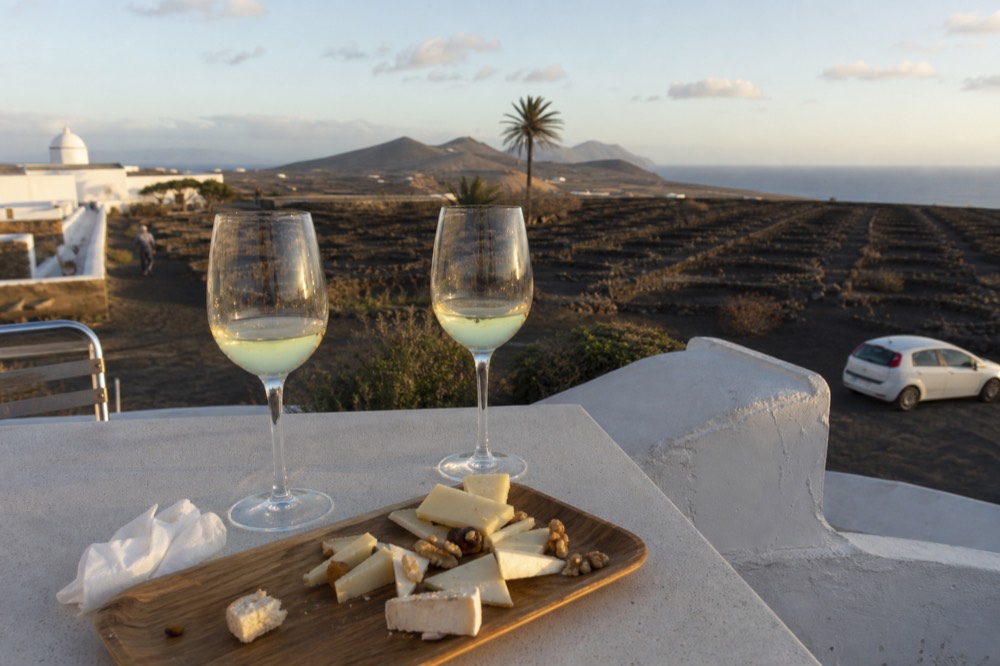
The fastest way to taste what Lanzarote is famous for is a bodega tasting in La Geria or San Bartolomé, where Malvasía Volcánica is poured minutes from the pits it grows in, usually alongside local goat cheese. Self-drive tastings start around $28 with transport-included multi-winery tours from about $80, and every tour on the island's roster offers free cancellation, so it is table stakes rather than a differentiator.
The pairing format is worth choosing deliberately. A cheese pairing does more than feed you: artisan goat cheese is the island's other proud food tradition, and Finca de Uga in Yaiza, whose cheeses several La Geria bodegas serve, took gold and Best Canary Cheese at the World Cheese Awards 2025, per the regional trade press. A Canarian pairing plate puts the white, the red and the cheese in one sitting, which is the whole island in a single table.
For bottles to take home rather than glasses on site, the fuller shortlist with medals attached is in Lanzarote wine brands worth buying, and the honest quality verdict behind it is in is Lanzarote wine any good. For a tasting built specifically around the island's natural wines and a seasonal Canarian plate, this La Geria pairing covers the ground:
Whether you drive yourself or ride along matters more here than in most wine regions, and not only for convenience. Spain's general breath-alcohol limit is 0.25 mg/l, lower than the UK's 0.35, and a tasting flight across several bodegas will not leave most people confidently under it. That is a real, sourced reason the transport-included formats exist, and it needs no invented urgency. Lanzarote Wine Tours exists largely because of that number.
The short answers: Lanzarote is famous for Malvasía Volcánica, a white grape grown in volcanic ash pits; it also makes Listán Negro reds and sweet Moscatel and Malvasía Dulce Natural styles; roughly 84% of the DO's wine is white and about 98% stays in Spain; and the fastest way to taste any of it is a bodega tasting in La Geria or San Bartolomé. The questions below cover the details.
Common Questions About Lanzarote's Famous Wine
What Wine Is Lanzarote Famous For?
Malvasía Volcánica, a white grape that accounts for roughly 70% of a typical harvest and grows in hand-dug pits through volcanic ash. The island is also known for Listán Negro reds and rosés and for sweet styles, Malvasía Dulce Natural and Moscatel, all under the DO Lanzarote appellation.
Is Malvasía Volcánica The Same Grape As Other Malvasía?
No. It is Lanzarote's own form of the variety, distinct from the Malvasía grown on Tenerife, La Palma or Madeira. The DO's specification lists it among the preferred white varieties, and it dominates the island's oldest, deepest-ash vineyards.
Does Lanzarote Make Red Wine?
Yes, but not much. Roughly 84% of what the DO sells is white; reds and rosés together are a small fraction. The red worth knowing is Listán Negro, behind bottles like El Grifo's Rosado de Lágrima and Vega de Yuco's Esencia Yaiza.
Why Is Lanzarote Wine Hard To Find At Home?
About 98% of DO Lanzarote's wine is sold inside Spain. The 2025 harvest produced 1,502,656 bottles against roughly 3.45 million annual visitors, so the wine is scarce relative to the tourism, and most of it is drunk on or near the island.
How Is Lanzarote Wine Different From Tenerife's?
Soil and scale. Lanzarote grows in dry ash pits on an island with under 150 mm of rain a year, led by Malvasía Volcánica; Tenerife's DOs grow Listán varieties on wetter, higher volcanic slopes at far larger volumes. At the Canaries' official 2026 competition the top wines came from Tenerife, which is worth knowing before you compare.
Can You Taste Lanzarote's Famous Wine At The Winery?
Yes. Bodega tastings in La Geria and San Bartolomé pour Malvasía Volcánica beside the vineyards it comes from, from about $28 per person for a self-drive tasting to about $80 and up for transport-included multi-winery tours. Free cancellation is standard across the island's tour roster.