What Is Lanzarote Famous For?
Lanzarote is famous for Timanfaya's volcanoes, Cesar Manrique's architecture and a UNESCO biosphere island, but its strangest claim is wine grown in pits dug through volcanic ash. Here is what the island is known for, and how to see it.
 By Sergio Betancort, Lanzarote Wine Tour Specialist and Volcanic Vineyard Guide
What Is Lanzarote Famous For?
Lanzarote is famous for its striking volcanic scenery, most notably the otherworldly lava fields of Timanfaya National Park, along with the lasting artistic and architectural legacy of Cesar Manrique, who shaped how the island developed. It is also known for its unusual wine region, where vines are planted in pits dug through black volcanic ash to reach moisture and survive the dry conditions. Around 3,455,200 tourists visited in 2025, most of them drawn by the first two. The third is the part almost nobody expects, and it is the reason this site exists: a working appellation, recognised in 1993, whose vineyards were carved out of the debris of the eruptions that nearly ended farming on the island altogether.
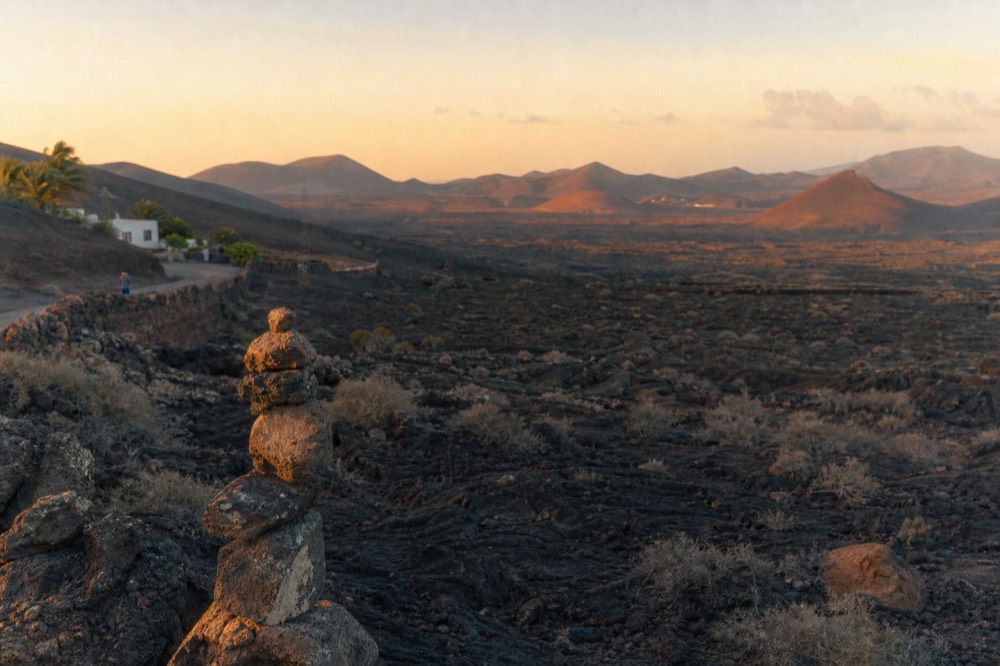
Timanfaya is the headline. Six years of eruptions between 1730 and 1736 buried the island's best farmland under lava and ash, and the park that protects that landscape now draws just under 1.5 million visits a year, making it Spain's fourth most visited national park in 2024. You cannot walk or drive into it freely: the only way in is the park's own coach route or its guided walking trails, and since the change to online-only booking, Montanas del Fuego tickets must be bought in advance with a chosen time slot. Adult entry is 30 euros, children under 7 free, and there are no sales at the gate at all.
Manrique is the second name. Born in Arrecife in 1919, he designed the island's signature visitor centres, including Jameos del Agua, Mirador del Rio, the Jardin de Cactus and the coach route through Timanfaya itself. His influence is why Lanzarote still looks like Lanzarote: low white buildings, no roadside billboards, and a building restraint that UNESCO credits to the Insular Land Plan adopted in 2001. The island has been a UNESCO Biosphere Reserve since 1993, covering 129,310 hectares of land and sea.
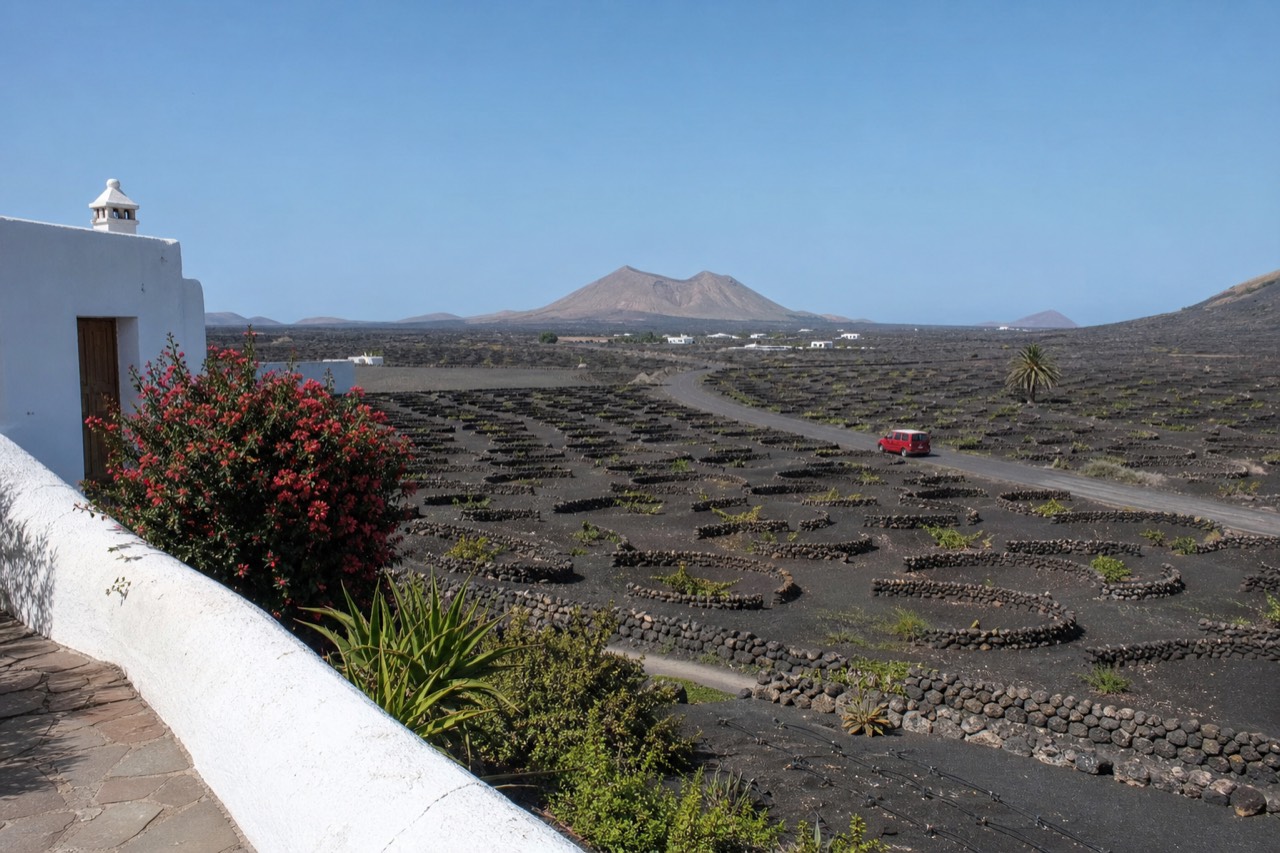
The third famous thing is the one that surprises people. In the ash fields south of Timanfaya, farmers dug pits down through the lapilli to reach the soil buried by the eruptions, planted a vine in each one, and built a half-moon stone wall around it to block the trade winds. That is La Geria, and it produces wine from one of the most improbable vineyards on Earth. If you want to see all three faces of the island in one day, these are the tours that do it best.
What Is So Special About Lanzarote?
What makes Lanzarote special is that its most fertile farmland is made of volcanic ash, farmed entirely by hand in a system now recognised internationally as agricultural heritage, on an island that receives under 150 millimetres of rain a year. The volcanic dry-farming system, growing grapes, sweet potatoes and legumes in lapilli and sea sand without irrigation, was added to the FAO's Globally Important Agricultural Heritage Systems list in 2025. The FAO listing covers the island's volcanic dry-farming system, and it is the most authoritative answer to this question that exists.
The mechanics are worth understanding, because you can see every part of them from the road. The eruptions laid down a blanket of porous volcanic gravel, called picón or rofe, over the old soil. The DO's own technical specification credits that layer with three things: it lets the scarce rain soak straight through instead of running off, it cuts evaporation from the soil beneath, and it regulates soil temperature. With under 150 millimetres of rain a year and effectively none between June and August, those three functions are the difference between a vineyard and a desert.
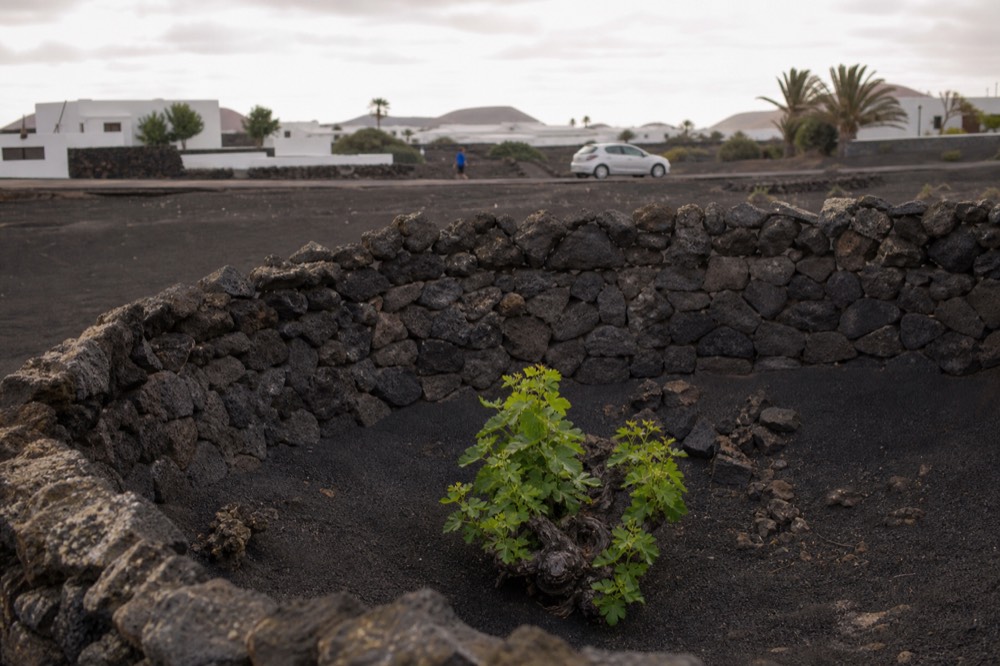
The pits themselves are the visual signature. Each hoyo is roughly three metres across and two to two and a half metres deep, dug down to the buried pre-eruption soil, with the vine planted at the bottom. In the deepest-ash zone of La Geria there are about 36 of those pits per hectare, against thousands of vines in a conventional vineyard. The half-moon stone walls, the zocos, all face the same way because the wind does: they shield each vine from the north-northeasterly trades.
The cost of all this is yield. The appellation permits up to 7,000 kg of grapes per hectare; La Geria actually produces around 1,000, one seventh of the legal ceiling, because every pit is dug and maintained by hand. Roughly 84 per cent of what the DO sells is white wine, and about 98 per cent of it never leaves Spain, which is why most visitors have never tasted it before arriving. The 2025 harvest brought in 843,000 kg of grapes and 1,502,656 bottles, while the island received roughly 3.45 million tourists. The wine is genuinely scarce relative to the tourism.
That scarcity, and the fact that Spain's breath-alcohol limit of 0.25 mg/l is lower than the UK's 0.35, is the honest case for seeing La Geria with a guide and a driver rather than tasting your way along the LZ-30 at the wheel.
What Is Lanzarote Best Known For?
Lanzarote is best known for its dramatic volcanic landscapes, especially the fire mountains of Timanfaya National Park, which drew 1,492,435 visits in 2024 alone. Beyond that, the island is famous for the artistic and architectural legacy of César Manrique, whose visitor centres shape so much of the island's character, and for its warm, dry weather that attracts travellers all year round. The CACT network of centres around it, from Jameos del Agua to the Jardin de Cactus, is the backbone of almost every holiday itinerary on the island. The wine country barely registers in most of them, which is a missed opportunity given how close it sits.
The numbers show why. Every major resort on Lanzarote sits inside half an hour of La Geria by road: Puerto del Carmen is about 14 km and 17 minutes away, Playa Blanca about 24 km and 25 minutes, Costa Teguise about 28 km and 29 minutes. The wine region is not an expedition at the far end of the island, it is practically next door to the hotels, strung along the LZ-30 between the Monumento al Campesino junction and Uga.
The wine itself has quietly earned a place on the list of things the island is known for. At the Decanter World Wine Awards 2026, Vega de Yuco's Princesa Gara 2022, a Malvasia Volcanica aged on lees, took a Silver medal, which on Decanter's scale means 90 to 94 points, judged in London by a panel drawn from 35 countries. El Grifo, founded in 1775 by the inscription on its own wine press, won two gold medals at Mundus Vini 2026 and received the Canary Islands Tourism Award for Tourist Excellence 2025. The 2026 harvest began in the first week of July, and the Consejo Regulador forecasts it will close above three million kilos, roughly triple the 2025 crop.
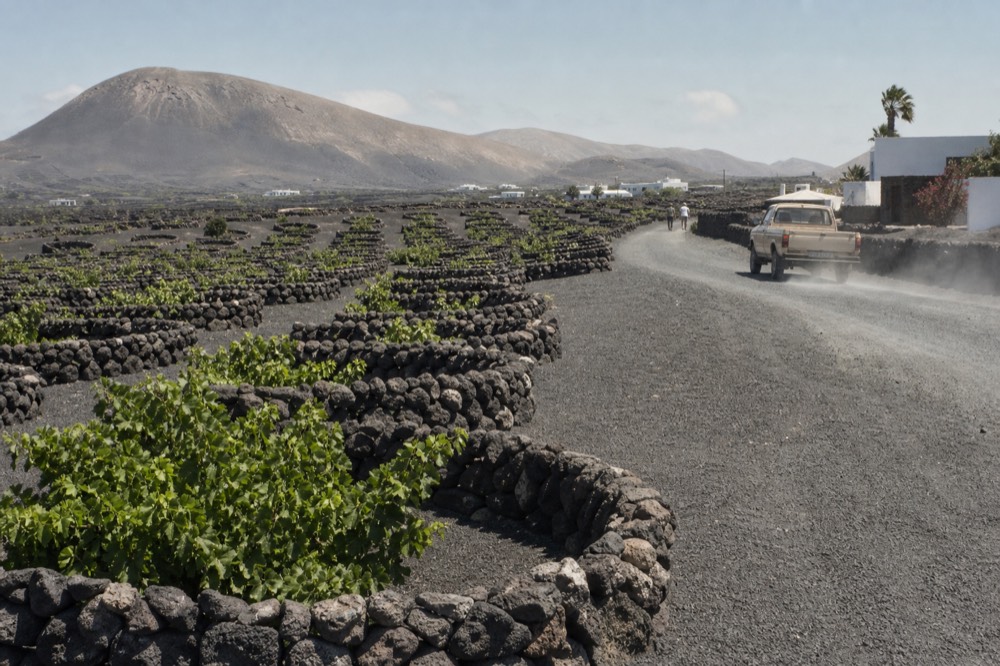
For travellers who want the wine story rather than just a glass of it, a longer visit makes sense. The Family Winery, 3-Hour Lava Flow experience spends a full afternoon at a family bodega inside the lava landscape, with snacks, cheese and chocolate tastings alongside the wines, from $65 per person, rated 5.0 across 7 reviews. It is the most complete answer to "what is this island actually making" that you can book in one sitting.
Why Is Lanzarote Famous?
Lanzarote is famous because a six-year volcanic catastrophe between 1730 and 1736 created a landscape unlike anywhere else in Europe, and the island turned that catastrophe into its identity: a national park protected since 1974, an artist's vision of restrained white architecture, and a wine appellation recognised in 1993. Where the lava ran, farmland was lost for good. Where ash fell instead, farmers dug down through it and got the land back, and that recovery is what you are looking at when you drive the LZ-30 today.
That single sentence explains almost everything a visitor sees. The black cones and lava fields of Timanfaya are the catastrophe itself, protected as a national park since 1974. La Geria is the recovery: a protected landscape of 5,255 hectares across five municipalities, where the ash blanket became a growing medium. Manrique, born two centuries after the eruptions ended, built the visitor architecture that lets millions of people see both without ruining either.
The wine is the living proof of the recovery. Malvasia Volcanica is the island's signature grape, traditionally the first variety into the winery each July, and the DO that protects it covers the whole island: about 1,900 registered hectares, roughly 1,860 growers and 41 registered bodegas per the Spanish agriculture ministry's 2023/24 DOP report. The 2025 vintage was officially qualified "muy buena" after a blind tasting of 23 wines, a remarkable verdict for one of the smallest harvests in a decade.
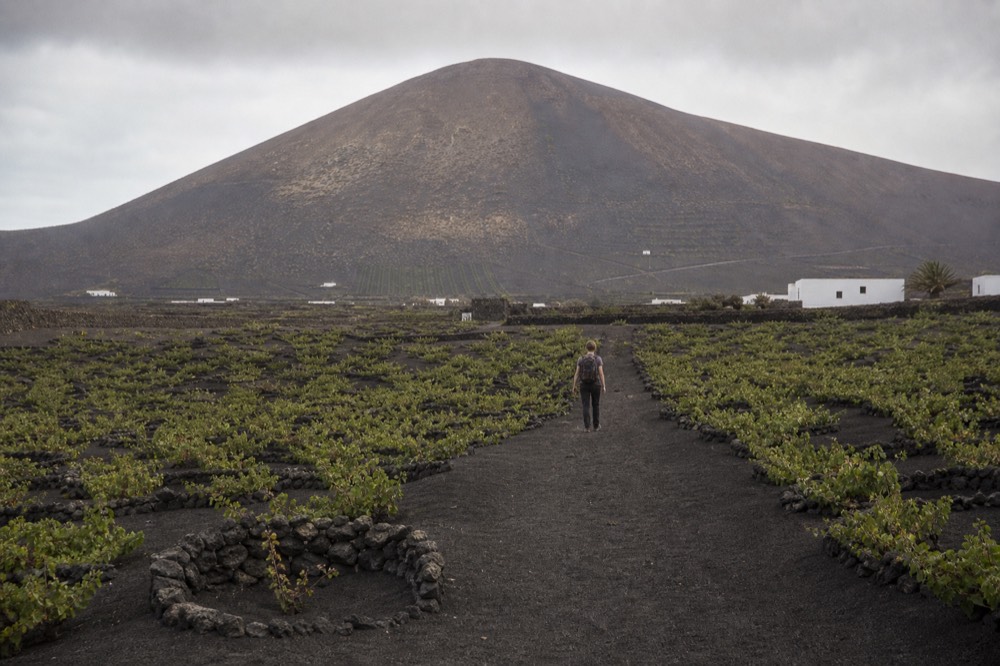
The best way to understand why the island is famous is to walk across the boundary between the two halves of the story, the dead lava and the living vineyard. The Small-Group Hike, Wine And Cheese tour does exactly that: a 4-hour guided walk through the volcanoes and vineyards of La Geria, capped at 10 participants, ending with a wine and cheese tasting, from $55 per person and rated 4.9 across 211 reviews. Few tours on the island put the catastrophe and the recovery in the same afternoon so directly. Check availability if that framing appeals, and read more in the La Geria wine region guide.
How Do You Fit The Famous Parts Into One Trip?
You can see Timanfaya, a Manrique centre and a La Geria bodega in a single day, because nothing on Lanzarote is more than about 40 minutes' drive from anything else, but Timanfaya now needs a pre-booked time slot bought online before you leave the hotel. The constraint that trips people up is the park: no gate sales, online purchase only, a chosen slot, and arrival 15 minutes early. Build the day around that slot, not around the wineries, and the rest of the island falls into place around it.
A workable shape looks like this: book the first available Timanfaya slot of the morning, drive the LZ-30 through La Geria midday, stop at one bodega for a tasting, and finish at Jameos del Agua or the Jardin de Cactus in the late afternoon when the crowds thin. The CACT centres each price separately, with no combined multi-centre ticket, so there is no bundle to chase.
| Stop | Entry cost | What you get |
|---|---|---|
| Montanas del Fuego, Timanfaya | 30.00 euros, under-7s free | 90-minute visit with the 35-minute coach route through the lava fields |
| Jameos del Agua | from 17.00 euros | Manrique's first centre, built into a lava tube |
| Jardin de Cactus | 9.00 euros | Manrique's cactus garden on the edge of wine country |
| Casa Museo del Campesino | Free | Manrique's tribute to Lanzarote farming, right on the LZ-30 |
| A La Geria tasting tour | from $28 per person | The wine half of the story, cheese or chocolate pairing included |
The one pairing that does not exist is worth knowing before you plan: no tour operator on the island sells a Timanfaya day with a real winery tasting attached. Tours that mention the park are either paying the entry themselves or driving you past it, so check what the listing actually says. A guided wine-and-volcano day that holds the entries removes the slot problem entirely, and the wine and volcano tours guide breaks down which listings include what.
For the planning itself, Lanzarote Wine Tours keeps the whole picture in one place: what each bodega charges, which resorts the tours collect from, and when the harvest calendar makes the vineyards look their best. The when to visit guide covers the timing question in detail, including the July harvest and the November Malvasia Week.
These are the questions travellers ask most about what Lanzarote is known for, answered with the verified numbers: the park's visitor figures, the FAO heritage listing, the Decanter medal and the booking rules that catch people out. Each answer below stands alone, so you can jump straight to the one you came for.
A few practical points make that shape easier to run. The 30.00-euro Timanfaya ticket covers the full 90-minute visit, including the 35-minute coach route through the lava fields, and under-7s go free, so a family of four with young children pays for two adults and any older children only. Because the visit runs 90 minutes, treat the first morning slot as the anchor: you are typically out by late morning, which leaves the whole of La Geria and the LZ-30 clear before the bodegas fill up at midday. Casa Museo del Campesino sits right on that road and costs nothing, which makes it the natural stop between the park and the vineyards if the timing is running ahead of schedule.
On the wine side, the numbers explain why a tasting tour starts at around $28 per person with a cheese or chocolate pairing included: growers were paid about four euros a kilo in 2026, a year in which the harvest is forecast to close above three million kilos after just 843,000 kg in 2025. The jump roughly triples the island's grape intake, so bodegas have more fresh stock to pour than at any point since the lean 2025 vintage, and the 1,373 phylloxera inspections in the 2026 campaign, all clear, mean the vineyards you drive through on the LZ-30 are healthy ones.
The FAO listing from 2025 is also worth factoring into the itinerary itself. The ash-pit method that earned the Globally Important Agricultural Heritage Systems recognition is exactly what you see from the road through La Geria: vines sunk into individual hollows dug into the black ash, each sheltered by a low semicircular stone wall. Driving that stretch between Timanfaya and the bodega stop is not just transit between stops, it is the thing the heritage listing was awarded for, so leave time to pull over and look at it rather than treating La Geria as a corridor.
Common Questions About What Lanzarote Is Famous For
What Is Lanzarote Famous For?
Lanzarote is famous for the volcanic landscape of Timanfaya National Park, the architecture and influence of Cesar Manrique, and La Geria, the wine region where vines grow in hand-dug pits in volcanic ash. Around 3.45 million tourists visited in 2025, drawn mainly by the first two, and most leave having missed the third.
What Is So Special About Lanzarote?
Its most fertile farmland is volcanic ash, farmed by hand in pits about three metres across and two to two and a half metres deep, a system the FAO added to its Globally Important Agricultural Heritage Systems list in 2025. The island is also a UNESCO Biosphere Reserve, designated in 1993.
What Is Lanzarote Best Known For?
Timanfaya National Park, which recorded 1,492,435 visits in 2024, Spain's fourth-highest of any national park, plus the Manrique-designed centres such as Jameos del Agua and the Jardin de Cactus. The island's Malvasia Volcanica wines, including a Decanter 2026 Silver medal winner, are its quieter claim to fame.
Why Is Lanzarote Famous?
Six years of eruptions between 1730 and 1736 buried the island's farmland and created a landscape unlike anywhere else in Europe. The island turned that into a national park, a protected wine landscape and a building tradition of low white architecture, and the vines dug back into the ash made it a wine appellation.
Can You Visit The Vineyards In The Volcanic Ash?
Yes. Several bodegas in La Geria welcome visitors, from El Grifo's museum and tastings to Rubicon's terrace tours, and guided tours collect from the resorts. Every resort is within about half an hour's drive of the wine region.
Do You Need To Book Timanfaya In Advance?
Yes. Montanas del Fuego sells no tickets at the gate; entry must be bought online with a chosen date and time slot, and you must arrive 15 minutes before it. Adult entry is 30 euros, children under 7 free.