When To Visit Lanzarote Wine Country: The Harvest, The Heat And The Quiet Months
Lanzarote picks its grapes earlier than almost anywhere in Europe, and the rhythm of that harvest shapes everything else in wine country: when the bodegas are crowded, when the wind cancels festivals, and when you get the terrace to yourself.
Short answer
The Lanzarote harvest starts in the first week of July, among the earliest in Europe, and runs into September. For harvest colour visit July to August; for cool walking weather and empty tasting rooms, October to April. Semana Malvasía runs 2 to 8 November 2026, and the wine tastes the same all year.
When Is The Lanzarote Wine Harvest?
The Lanzarote harvest begins in the first week of July and runs into September, making it one of the earliest harvests in Europe. In 2026 the first Malvasía Volcánica grapes were picked by Bodegas David Fernández and Jable de Tao in early July, and by 2 September the Consejo Regulador still expected the campaign to close above three million kilos, roughly triple the 843,000 kg of 2025.
That timing is not a fluke of one year. In 2025 the first fruit came in on 16 July, again with Malvasía Volcánica leading, which is traditional: the island's signature grape is reliably first into the winery. Two years of press coverage describe Lanzarote as the first wine region in Europe to start picking each campaign, and while that claim comes from regional media rather than an official body, the dates behind it are on the record.
The volume swings enormously from year to year, and that is worth knowing before you plan a trip around it. The 2025 campaign brought in 843,000 kilos and produced 1,502,656 bottles, one of the smallest harvests in years, and the vintage was still officially qualified "muy buena" after a blind tasting of 23 wines. The 2026 crop is running far ahead: around 900,000 kilos had been picked by the start of August, and the Consejo Regulador forecast a close above three million kilos as the campaign continued into September, with the fruit in excellent condition. Growers were paid about four euros a kilo for grapes in the 2026 campaign, which explains why the hand-dug pits of La Geria stay worth working.
Why so early? Lanzarote is a desert island. The DO's own specification records mean annual precipitation below 150 mm, almost no rain between June and August, and a mean temperature of 20 °C. The grapes ripen fast and the growers cannot wait. If you want to read more about the landscape that produces all this, our guide to La Geria's protected volcanic landscape covers the pits, the ash and the walls.
What Is Each Month Like In Lanzarote Wine Country?
Every month works for wine on Lanzarote, but they work differently: July and August bring the harvest and the heat, September and October bring quiet vineyards and the first new-juice smells, November brings Semana Malvasía, and February to May brings cool, empty tasting rooms pouring exactly the same bottles.
The honest month-by-month picture is below. One caveat first: there is no official month-by-month visitor curve for the bodegas, so the crowd notes are built from the harvest calendar, the island's climate data and the event schedule, not from a published statistic.
| Month | Weather | What is happening in wine country |
|---|---|---|
| January | Mild, around 17-20 °C, occasional rain | Quiet season, empty terraces, full range of bottles to taste |
| February | Mild, cool evenings | Quietest month for coaches; same wines as August |
| March | Warming, breezy | Vineyard pruning visible; DO's 2026 calendar ran the vintage qualification act in May |
| April | Warm, low 20s | Spring green in the vine pits, comfortable walking weather |
| May | Warm, sunny | Ironman closures hit LZ-30 sections on 13 May 2026; wine country otherwise calm |
| June | Hot, windy | Festival season starts, but wind is a real risk, see below |
| July | Hot, 25-30 °C | Harvest opens, first Malvasía Volcánica picking, earliest tastings of new campaigns |
| August | Hottest, windy | Traditional vendimia events: tenderete at Bodegas Rubicón on the 14th, camel-drawn harvest at Bodega La Geria on the 15th, in 2026 |
| September | Warm, easing | Harvest tail-end, forecast above 3 million kg in 2026, vineyards quiet of tourists |
| October | Warm, quieter | Post-harvest calm, terraces empty, first look at a new vintage's potential |
| November | Mild | Semana Malvasía, 2 to 8 November 2026, island-wide wine events |
| December | Mild, festive | Quietest tasting rooms of the winter, harvest a distant memory |
Two practical notes sit behind that table. First, the island's wind is not a footnote. The main Sonidos Líquidos event at Bodega La Geria on 6 June 2026 was cancelled outright because gusts had already exceeded 75 km/h and the forecast said worse; the decision was taken with the island's safety authorities. An outdoor June wine festival being called off by wind tells you what the island's climate actually does, and it is a better planning fact than any generic weather paragraph.
Second, if you are pairing wine country with Timanfaya, the timing constraint is now hard: Montañas del Fuego sells no tickets at the gate at all. CACT's own FAQ states "There are no ticket sales at the box office. Tickets must be purchased online in advance", with a mandatory date and time slot and arrival 15 minutes early. Adult entry is 30.00 euros, children under 7 free. A casual "winery first, volcano after" day no longer works unless you have already booked the slot. Our wine and volcano tour guide goes through what a paired day realistically looks like.
If you are deciding how to spend a half-day in any of these months, these three formats cover the spread: a guided walk through the vineyards themselves, a short sunset tasting, and a full-day multi-winery tour with food.
How Busy Do The Bodegas Get, And When Should You Avoid The Coaches?
The busiest stretch for Lanzarote's tasting rooms is July through September, when the harvest draws visitors and the island's peak tourist season overlaps with it; the quietest months are January, February, November after the Malvasía festival, and early December, when the same bodegas pour the same wines to a fraction of the crowd.
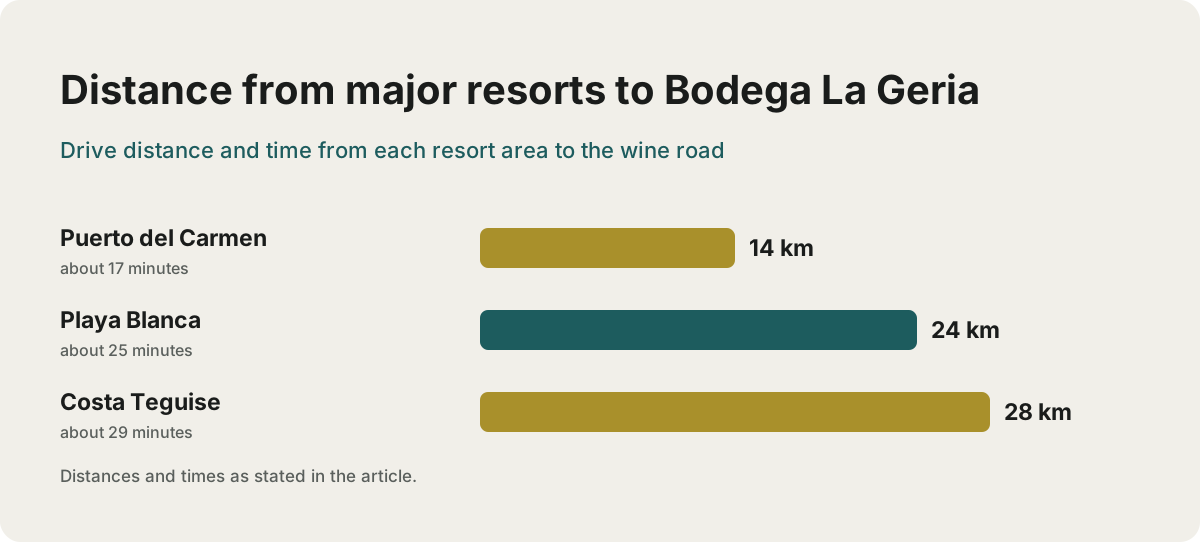
Lanzarote received 3,455,200 tourists in 2025, a record, up 1.4 per cent on 2024. That volume has to fit on a small island, and a meaningful share of it passes through La Geria, because every major resort sits within half an hour of the wine road: Puerto del Carmen is about 14 km and 17 minutes from Bodega La Geria, Playa Blanca about 24 km and 25 minutes, Costa Teguise about 28 km and 29 minutes. A wine tour here is a half-day trip, not an expedition, which is exactly why the tasting rooms fill up in high season.
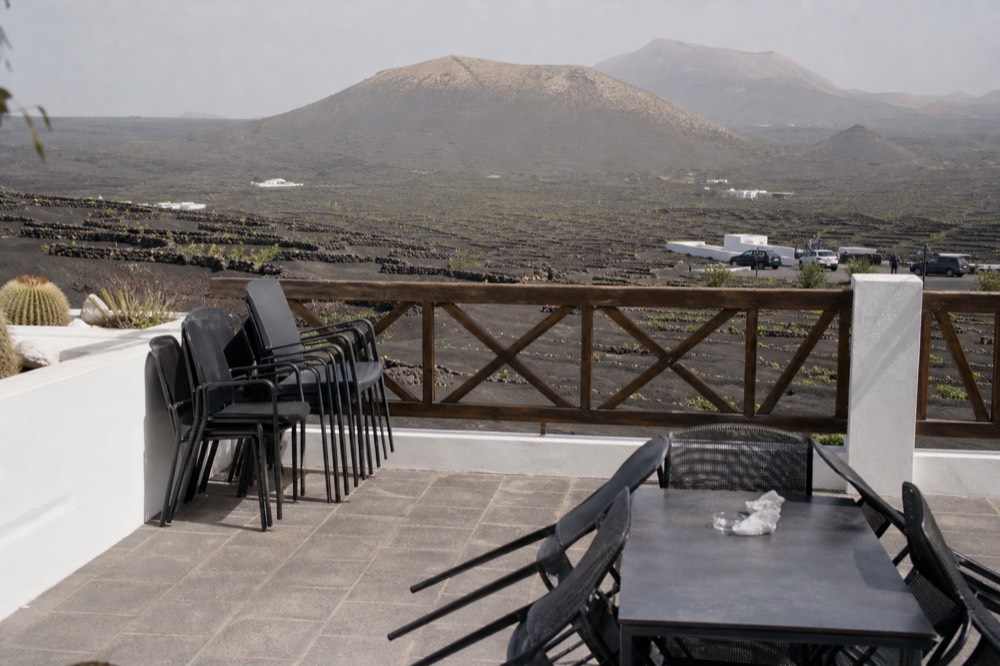
The wineries themselves publish small-group caps that shape how busy a visit feels. El Grifo limits its 120-minute Wine Lovers experience to 12 people and keeps its tastings adults-only; Rubicón runs its guided tours at a minimum of 6 and maximum of 12; Bodega La Geria asks groups over 8 to email ahead and releases its guided tours for sale only 12 days before the chosen date. In February you may be one of a handful of people on the terrace. In August you will be sharing it.
| Period | Crowd level at the bodegas | Best reason to go then |
|---|---|---|
| July to mid-September | Busiest: harvest interest plus peak tourism | Seeing the vendimia, picking and camel processions |
| Late September to October | Dropping fast | Warm weather, empty terraces, post-harvest calm |
| November | Busy only during Semana Malvasía week | The festival itself, 2 to 8 November 2026 |
| December to February | Quietest of the year | Same bottles, no queues, cool walking weather |
| March to May | Moderate, building | Green vine pits, comfortable hiking, spring light |
| June | Moderate but windy | Festival calendar starts, with cancellation risk |
One roster-level fact worth repeating: every tour on our roster offers free cancellation, so timing is a low-risk decision. Book the date that suits your itinerary and adjust if the weather or the crowd picture changes.
What Does The Vendimia Actually Look Like?
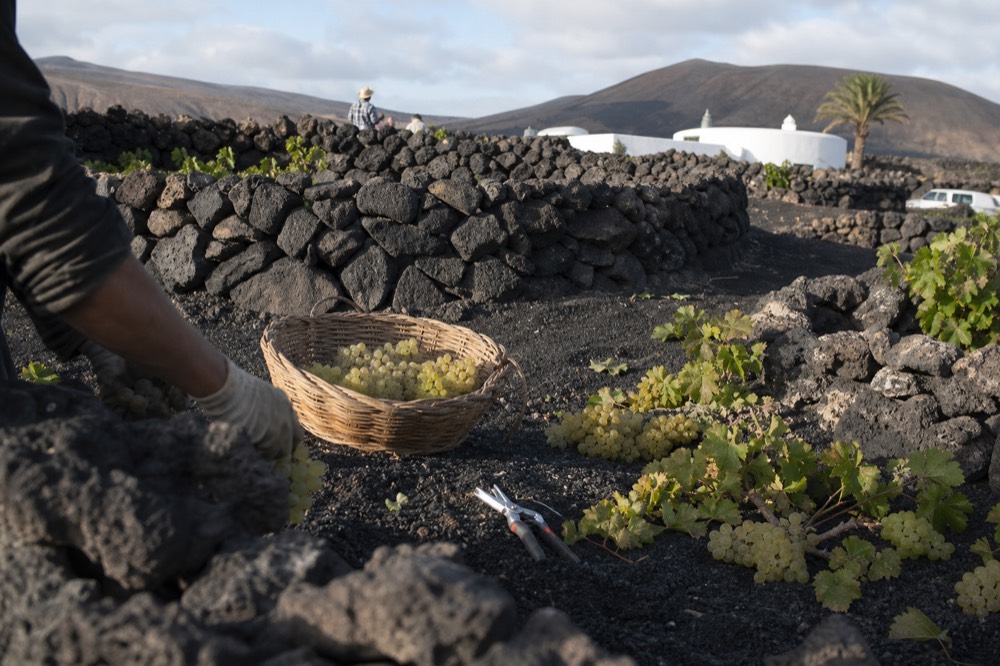
The Lanzarote vendimia is a hands-and-baskets affair: grapes picked by hand into small containers beside semicircular stone walls, and in mid-August a public, traditional version with a camel-drawn harvest, masses and a parranda at Bodega La Geria and a tenderete at Bodegas Rubicón, which in 2026 ran on 14 and 15 August.
The commercial harvest is invisible from most tasting rooms, because it happens in the pits, early, and moves fast. But the traditional events are public and free to watch. In 2026 the tenderete, an open-air music gathering, ran at Bodegas Rubicón on 14 August, and the camel-drawn grape harvest with mass and parranda ran at Bodega La Geria on 15 August. Those dates are from 2026 coverage; nothing has been announced for 2027, so treat mid-August as the window rather than the promise.
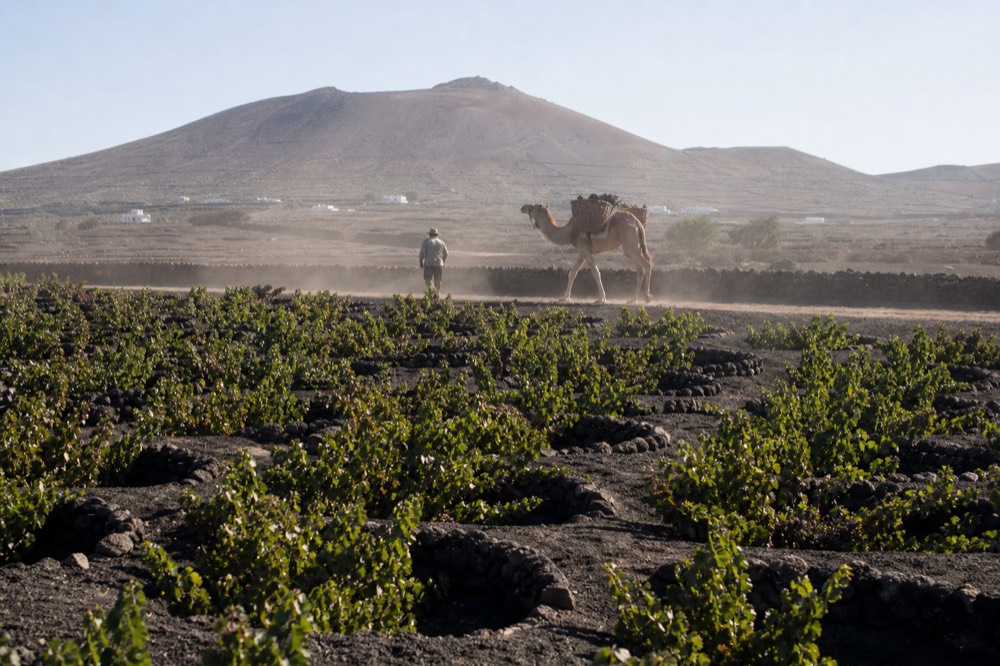
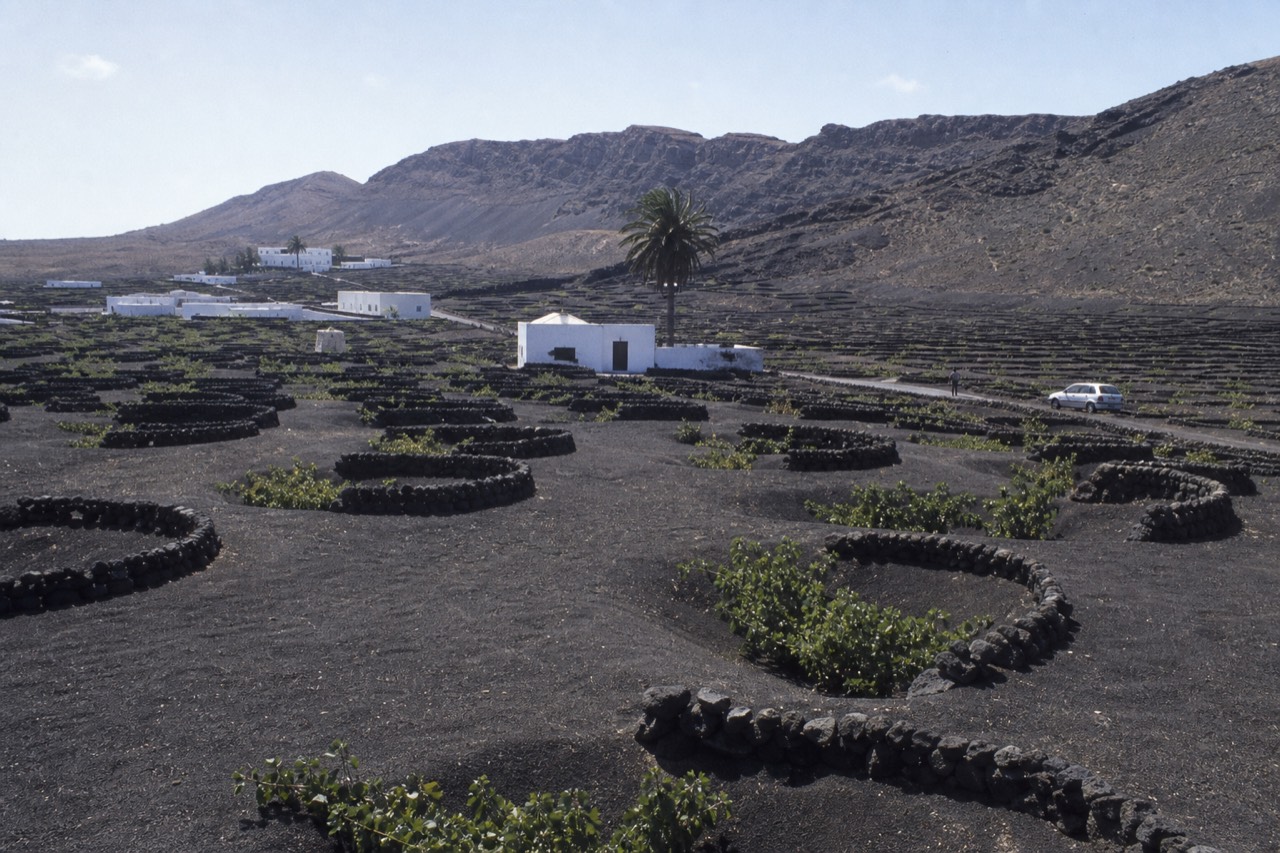
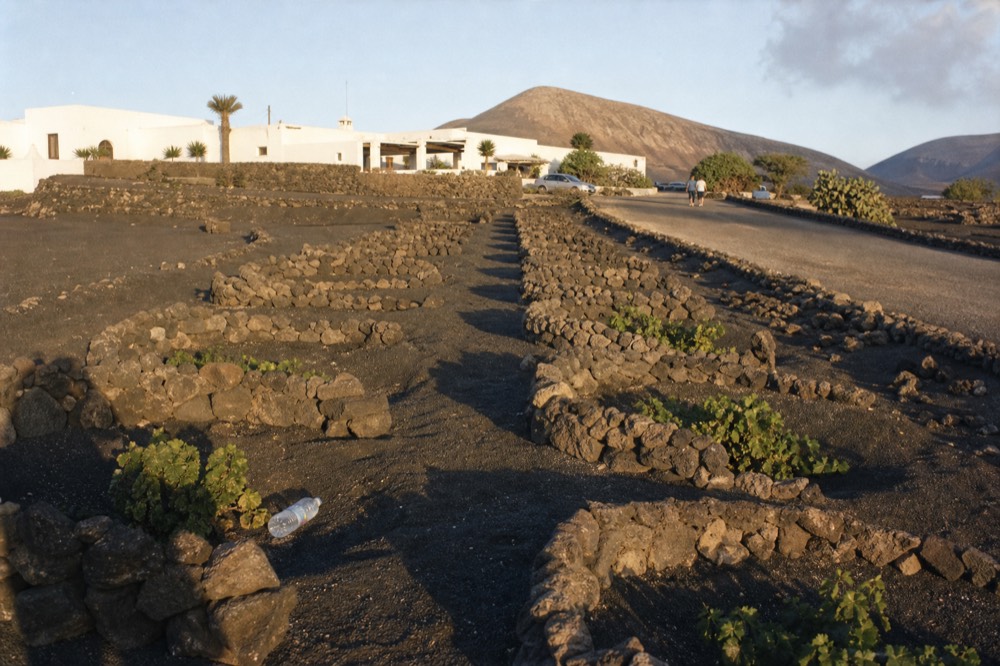
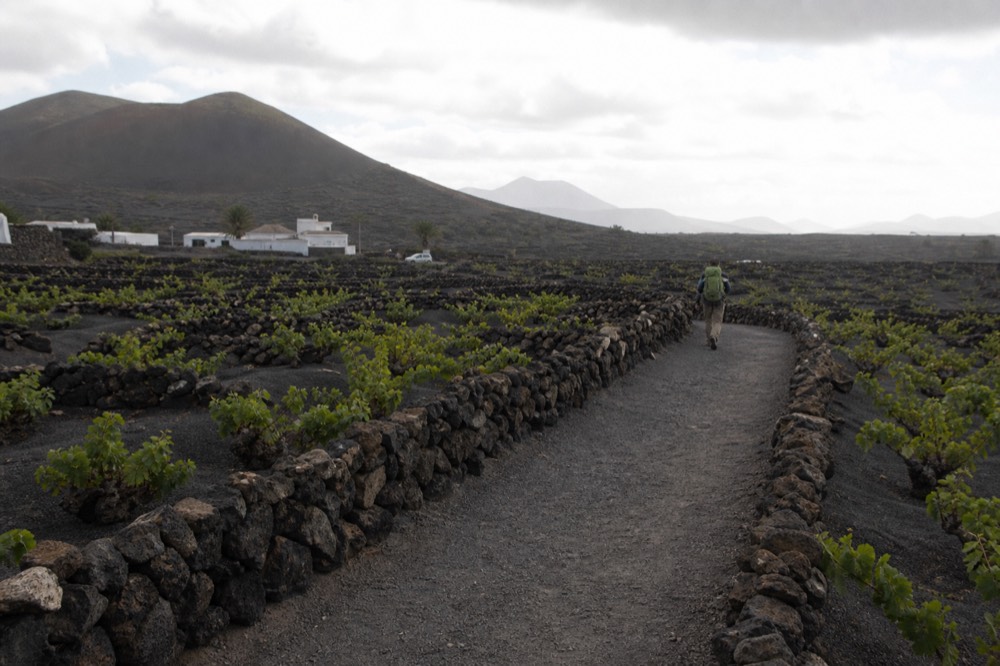
What you see in the pits explains why the harvest is so labour-intensive. In the deepest-ash zone of La Geria there are about 36 vine pits per hectare, each roughly 3 m across and 2 to 2.5 m deep, dug down to the buried pre-eruption soil, with a half-circle stone wall facing the north-northeast trades. A conventional vineyard runs to thousands of vines per hectare; La Geria runs to dozens of hand-dug hollows. Real yields sit around 1,000 kg per hectare against the DO's legal ceiling of 7,000. None of that changes with the season, but in July and August you can watch it working.
The harvest also has a strict order. Malvasía Volcánica is traditionally first into the winery, and in 2026 El Grifo's first pressings went to its Brut sparkling before the still wines followed. If a visit in late July or early August matters to you, phone ahead or check the winery's own pages: some bodegas run reduced tasting service on picking days, and the 2026 campaign began earlier than expected.
Is July Or August Too Hot And Windy For Wine Tours?
July and August are the hottest and windiest months, typically 25 to 30 °C with steady trade winds, and they are workable for wine tours if you pick morning or late-afternoon slots: the sunset tasting format exists precisely because the evening is when the ash plain becomes comfortable again.
The DO's own climate data frames it: mean annual temperature of 20 °C, a diurnal swing that can reach 17 °C in a single day, and effectively no rain from June to August. The wind is constant, and the zoco walls all point the same way because of it. That same wind cancelled the June 2026 Sonidos Líquidos festival at Bodega La Geria with gusts past 75 km/h, so any outdoor plan in high summer carries some risk of disruption, and free cancellation on a booked tour is genuinely useful rather than marketing filler.
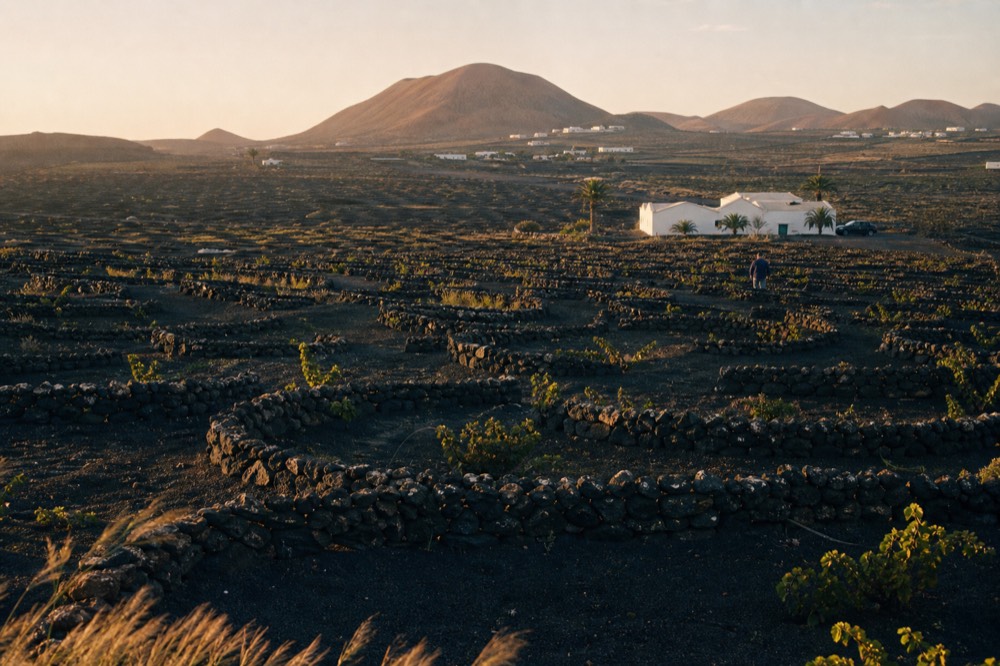
For walking-based formats, the calculus changes. A four-hour hike across the ash in August midday heat is a different proposition from the same route in February, which is why the guided walking tours matter for timing more than the seated tastings do. The small-group hike with wine and cheese at the end, limited to 10 participants, is a 4.9 across 211 reviews rated format from $55, and it is the one product on the roster where the month you choose really changes the experience. In summer, take the earliest slot available; in winter, any slot works.
If you would rather not walk at all in the heat, the seated and short formats are season-proof. The sunset vineyard visit with two artisan chocolate bonbons runs 1.5 hours from $30, rated 4.7 across 190 reviews, and it is flagged as likely to sell out, which in July and August it does.
What About Semana Malvasía And The Autumn Wine Calendar?
Semana Malvasía is the island's main public wine festival, scheduled for 2 to 8 November 2026, and it is the best single week to visit for anyone who wants wine events rather than just tastings: tastings, cultural programming and local participation aligned with World Wine Tourism Day.
The Consejo Regulador's published 2026 calendar gives the year its fixed points: the Acto de Calificación de la Añada 2025 in May, an Experiencia Enogastronómica at the Jardín de Cactus in July, and Semana Malvasía from 2 to 8 November. The 2025 edition, its eleventh, ran 3 to 9 November and closed with high participation from locals and visitors alike. These are the dates the wine year is actually built around, and they are public, low-cost entry points to the island's wine culture.
| Event | 2026 timing | What it is |
|---|---|---|
| Acto de Calificación de la Añada 2025 | May 2026 | Official blind tasting that qualified the 2025 vintage "muy buena" |
| Experiencia Enogastronómica | July 2026, Jardín de Cactus | Consejo Regulador wine-and-food event |
| Traditional vendimia events | 14-15 August 2026 | Tenderete at Rubicón, camel harvest at Bodega La Geria |
| Semana Malvasía | 2-8 November 2026 | Island-wide wine festival week, tastings and cultural events |
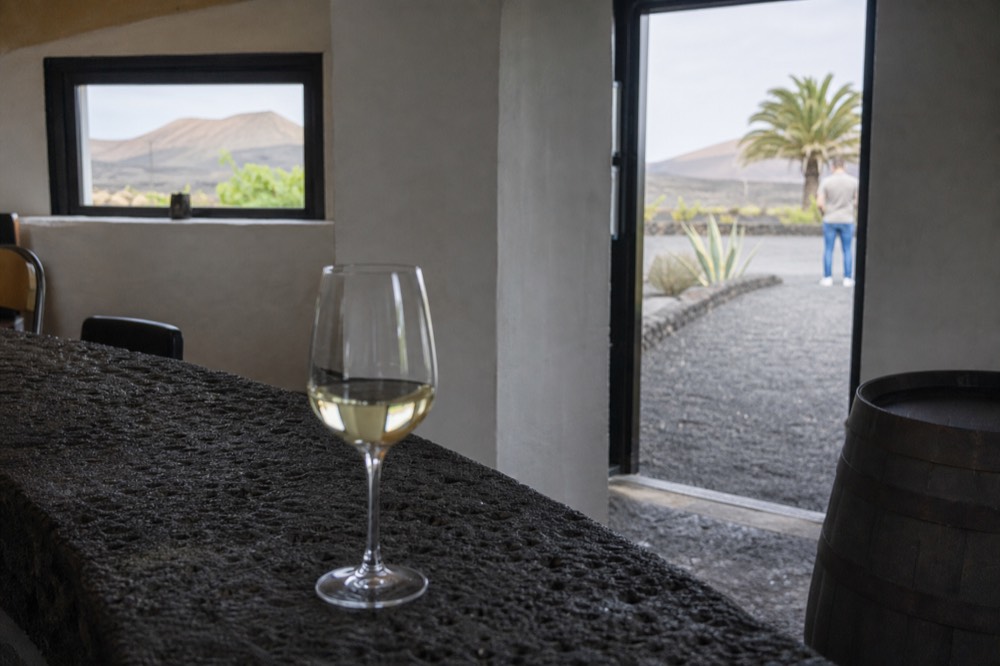
Autumn has a second, quieter advantage. By November the harvest is finished, the vintage is in tank, and the island's tourism volume has dropped from its summer peak. The 2026 harvest was forecast above three million kilos as it ran into September, so there will be a lot of new wine to talk about on the 2026-27 tasting circuit, and the bodegas will have the staff time to talk about it.
If you are building a full-day plan around the festival week or any autumn visit, the six-hour four-winery format with brunch and tapas at an 1890 bar, from $176 and rated 4.9 across 51 reviews, uses the shorter daylight well and spreads four stops across the whole of wine country.
Why Does A February Visit Taste Exactly The Same Wine?
Because Lanzarote's wine is bottled and sold year-round, a February tasting pours the same bottles an August one does: roughly 84 per cent of what the DO sells is white, about 98 per cent of it is drunk inside Spain, and the 1,502,656 bottles of the 2025 vintage do not change character between seasons, only the crowd around them does.
That is the honest answer to the most common timing anxiety. Visitors worry that coming outside the harvest means missing "the real thing", but the real thing at a bodega is the wine in the glass, and the wine in the glass is identical in February. What changes is everything around it: the temperature on the terrace, the number of coaches in the car park, and the pace of the person pouring.
The swing in the chart above is itself a reason not to over-plan around any single harvest. The 2025 campaign was one of the smallest in years and still produced excellent wine; the 2026 campaign is running at roughly triple that volume. The island's bodegas, 41 registered with the DO per the Spanish agriculture ministry's 2023/24 report, pour through all of it.
Winter has one more practical edge: it is the best walking season. The same trails that are punishing at midday in August are ideal at any hour from December to March, and the small-group hike through the volcanoes and vineyards, with wine and cheese tasting included, is the roster's most weather-dependent product. For more on the landscape you would be walking through, see how Lanzarote grows wine in volcanic ash, and for the honest case for the region in any month, our piece on whether La Geria is worth visiting breaks it down by interest.
Which Tour Format Fits Which Season?
Seated bodega tastings work in every month, walking tours are best from October to April or in early-morning summer slots, sunset formats are built for the hot months, and full-day multi-winery tours with transport are the year-round default because the island's drink-drive limit of 0.25 mg/l in breath is lower than the UK's 0.35.
That last point deserves its own sentence. Spain's general breath-alcohol limit is 0.25 mg/l, and for a driver carrying passengers it drops to 0.15 mg/l. A tasting flight in La Geria will not leave most people confidently under the first number, let alone the second. A tour with pickup included removes the question entirely, in February as much as in August, and that is a sourced reason rather than a sales line.
| Format | Best months | Why |
|---|---|---|
| Guided hike with tasting | October to April, or earliest slots May to September | Four hours on open ash; heat and wind are the constraints |
| Sunset bodega tasting | May to September | The format exists for warm evenings; two chocolate bonbons, 1.5 hours |
| Single-bodega seated tasting | Any month | Indoors or shaded terrace, weather barely matters |
| Multi-winery tour with transport | Any month | Pickup included, no drink-drive exposure, 3.5 to 6 hours |
| Evening tour with dinner option | Year-round, cooler in winter | 5.5 hours, tasting with cheese, olives and bread, dinner paid separately |
Match the format to the month rather than the month to the format, and almost any week on Lanzarote becomes good wine weather. The site itself, Lanzarote Wine Tours, exists because the timing question is really a format question: the harvest is a spectacle for July and August, but the wine is a 12-month proposition.
Whichever month you land on, these are the three formats that cover the seasonal spread:
The short answers to the timing questions: the harvest opens in early July and runs into September, Semana Malvasía falls on 2 to 8 November 2026, February pours the same bottles as August with a fraction of the crowd, and the major bodegas keep daily hours year-round, so no month is a wrong month, only a different one.
Common Questions About When To Visit Lanzarote Wine Country
When Is The Lanzarote Wine Harvest?
The harvest starts in the first week of July, among the earliest in Europe, and runs into September. In 2025 the first Malvasía Volcánica came in on 16 July; in 2026 picking began in the first week of July and the Consejo Regulador forecast a close above three million kilos.
Is August A Good Time To Visit La Geria?
Yes, if you want the traditional vendimia colour: in 2026 a tenderete ran at Bodegas Rubicón on 14 August and a camel-drawn harvest with mass and parranda at Bodega La Geria on 15 August. It is also the hottest, windiest, busiest month, so book morning or evening slots and expect crowds.
What Is Semana Malvasía?
The island's main public wine festival week, run by the Consejo Regulador. The 2026 edition is scheduled for 2 to 8 November, with tastings and cultural events aligned with World Wine Tourism Day. The 2025 edition ran 3 to 9 November and closed with high participation.
Is February Too Cold For Wine Tours In Lanzarote?
No. Winter days typically sit around 17 to 20 °C, which is comfortable for both seated tastings and hiking. February is the quietest month for coaches, and the bodegas pour exactly the same bottles as in summer.
Do The Bodegas Close In The Low Season?
The major visitable bodegas keep daily hours year-round. Rubicón's facilities are open daily 10:00 to 19:00; Bodega La Geria opens 10:00 to 19:00; El Grifo runs Monday to Friday with last entry at 17:15. Guided tour slots are fewer in winter, so book ahead for specific experiences.
Can I See The Grape Picking If I Visit In July?
Possibly, but it is not scheduled as a spectator event. The commercial picking happens early and moves fast through the pits, while the public traditional events with the camel harvest run in mid-August. Some bodegas also market seasonal "Harvest Experiences" as separate products, so check the winery's own pages.